My name is Andrew Rogers. I have been having the most wonderful time here at Scotch Oakburn College for the past two–and-a-half weeks. From the beginning of stepping into Scotch Oakburn, I have been welcomed by many people, including the wonderful Corrigans, my host family. Throughout these weeks, I have had the opportunities to partake in multiple classes, such as Flamin Grill (cooking class), laser printer maker, sports science and other subjects such as English and maths. It is definitely different from the academics at Athenian, however, I have found it extremely interesting and exciting.
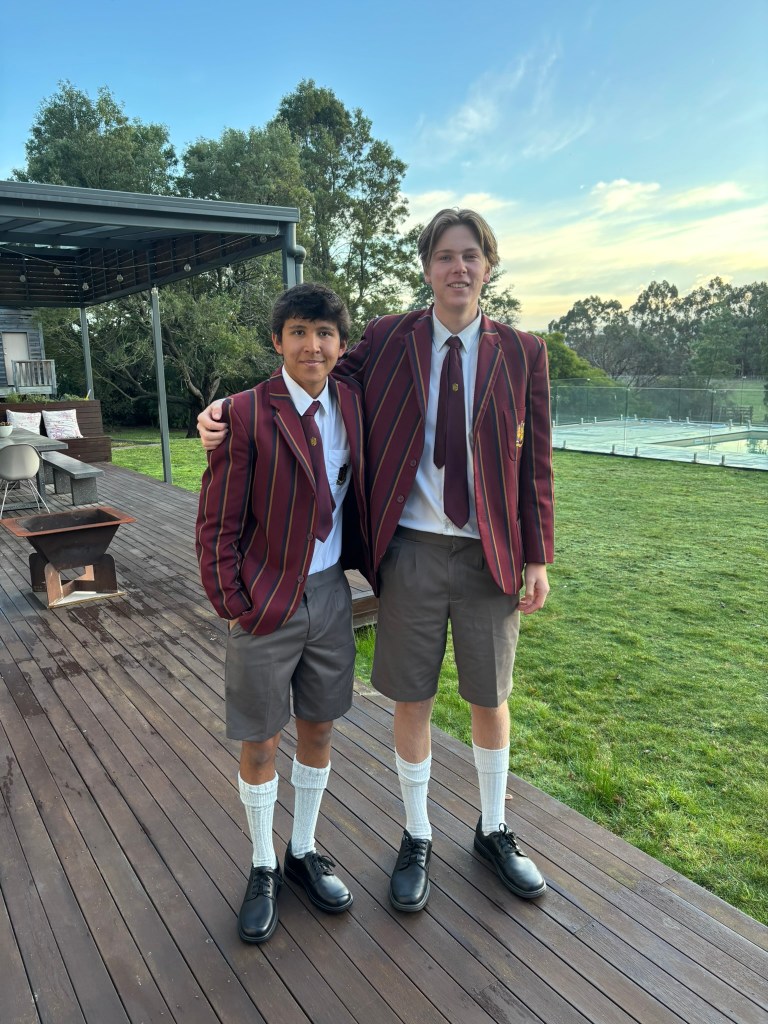
Regarding the students, they have all been interested to learn about the differences between our schools, homes, and countries as a whole. Everyone here has been friendly and curious, and we’ve had many good conversations comparing life in Tasmania to life in California. It’s also been great to step outside my normal routine and get a sense of how another school works. For example, Scotch students wear a nice uniform, with blazers, ties, and knee high socks.
I would absolutely recommend going on exchange to future 10th graders. It’s a unique chance to grow, gain perspective, and develop new friendships. You learn so much, not just in school. You learn about other cultures and communities, but also about yourself. I have grown as a person throughout my time in Tasmania and now have an improved perspective around multiple ideas, such as how the world views America.
If you get the chance, take it. Push your comfort zone and you won’t regret it.
I have been having an amazing time at Los Nogales these past several weeks. One of my favorite things about the school is how there are always little kids everywhere as the school is a Colombian version of what a K-12 school is for us. The grade system is a little different, only going up to 11th grade. (Their 11th graders are our seniors.) The campus is gorgeous with multiple several story buildings and beautiful landscaping. One large difference from Athenian is how there are no “passing periods” here. The time one class ends is the time another one starts. You are allotted three minutes to get to the next class and if you arrive after that then you are marked tardy.
All of the teachers here have been wonderful. I basically got to pick from all the classes offered and chose what I wanted. I ended up with multiple classes with other grades which has been wonderful for making friends. As well, I have a mix of classes in Spanish and English. I have not had to wear the uniform as the policy is that you wear the one from your home school and Athenian does not have a uniform. I joined the dance elective and gymnastic P.E. I am having a blast in the dance class.
Transportation to and from school (and to other places) does take much longer than I am used to, especially being a boarding student at Athenian (as I am a two minute walk from all of my classes). It takes about 30-70 minutes each way to and from school depending on the traffic, even though where I am staying is decently close to the school. If you think California traffic is bad just wait until you see what it is like in Colombia. The roads are structured differently and so many people drive that it creates immense traffic. There is even a policy here restricting the days you can drive based on the last number of your licence plate. Currently it is odd versus even on alternating days, but it is changing soon because so many people get around it by having multiple cars. As well, their version of FastTrack is ColPass. I have been loving looking out the windows of the car during drives and admiring the mountains here which are stunning. As well, the time going from place to place has also been a great opportunity to look at the different parts of the cities, other cars, public transit vehicles, and street art.
My goal for coming on Exchange was to improve my Spanish. Everyone here has been super patient as I try to speak as much Spanish as I can. All of the people here are super welcoming, and happy to help me practice my Spanish in conversation even though it is far from perfect. I found out upon arrival that most Exchange students who come to Los Nogales do not know any Spanish, which I found surprising. A challenge for me has definitely been trying to speak in as much Spanish as possible because I often cannot express what I would like to. This and doing some work from Athenian which require thinking/writing in English have been my main obstacles in improving my Spanish. In addition it does get tiring not speaking in my native language even though I absolutely love speaking in Spanish. That said, I am thoroughly enjoying conversing in another language and developing my speaking abilities. Over my time being here my comprehension has massively improved. I am feeling more comfortable speaking Spanish the longer I am here.
On to food, I love trying new foods so I have been trying as many as I can while I am here. I have fallen in love with this sauce called Aji. It is a spicy paste which is mixed with onion, cilantro, and some other ingredients. As well, I have tried multiple new fruits including mini mangos (which are incredible), granadilla, and mangostino. My favorite sweet treats have been Obleas which are these wafers and inbetween two of them there is Arequipe (we do not have Arequipe but it is like a mix between caramel and dulce de leche), these coffee candies, and Jet (a major chocolate brand here) chocolates with Arequipe. The school has a store where you can buy food and drinks during recess and lunch. It is a ton of fun to try the different foods and drinks the store offers. So far my favorites have been a drink called Hatsu (it is a sweet flavored white tea) and a cheese empanada.
I have loved making new friends in Colombia. Everyone has welcomed me with open arms. My Exchange partner’s friend group is so sweet and always works to make me feel included even with the partial language barrier. And while people have friends of all genders, the friend groups at Nogales are more divided by gender, so there are not many mixed friend circles. As well I was able to make a couple of friends outside of Nogales. Getting to know people here is a highlight of my Exchange.
There are some cultural differences. For example, I have been asked multiple times my opinion as a non-Black person from the U.S. on the n-word. While it is not a regular part of peoples’ vocabulary here, it seems to be more acceptable for people who do not identify as Black to say the word. The people who asked me knew that it was less acceptable in the US (or at least that it was something I would probably feel a little uncomfortable with–and I must note that it is unacceptable at Athenian and Colegio Los Nogales to say the n-word) but I never felt any pressure to say it. It is very intriguing, and I like learning about the cultural norms here. I have also been asked my opinion on Trump. I ended up having a very interesting conversation with a peer here on politics which I immensely enjoyed. Catholicism is the dominant religion here and is decently present in goings on..
Back to friendship, I have tried multiple times to translate sayings and other things in English into Spanish (literally) which did not turn out so well, but everyone has been so kind and has helped me learn a lot. One of my favorite activities I did with my friends was go to an event called Batuta where the bands from multiple schools perform together and tons of people come to watch. The bands here are incredibly talented and the people who are in them are typically the popular kids.
I am going to miss all of the friends I have here and am so grateful for the experience.
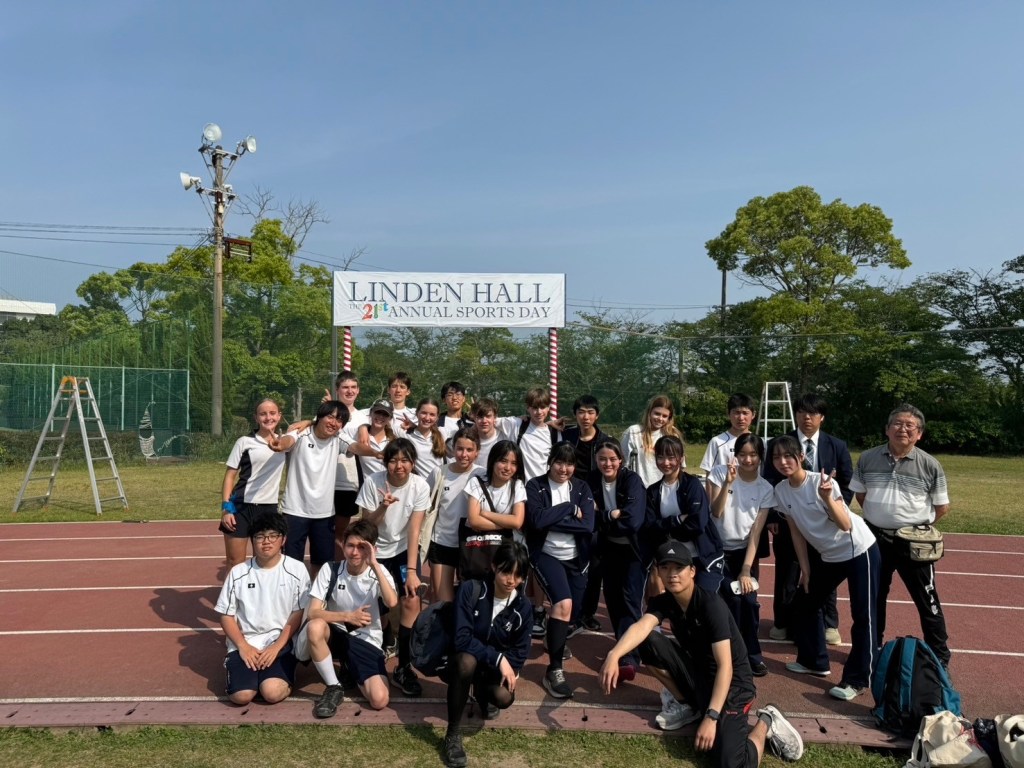
Over the summer of 2024, I went on exchange to Linden Hall School in Fukuoka, Japan. It was an amazing, once-in-a-lifetime experience. I feel so fortunate to have met many amazing people, explored the region, and practiced my Japanese language skills!
I arrived in Japan early on a sunny Saturday morning. I was picked up by my host mom and my exchange partner Sona who took me to the school dorms to settle in. There were six other exchange students from Australia at the school for part of the time that I was there. They were able to introduce me to the school and show me around the town that I would be living in for the next seven weeks. Chikushino is a smaller town, 15 minutes by local train outside of Fukuoka, a big port city on the island of Kyushu in the south of Japan. My school was part of a big university so there were lots of college students walking around. As we were foreign-looking, many of the college students loved speaking in English to us and it was fun speaking with them.
Linden Hall is a pretty small school. It has one central building that extends up six floors, which made the daily commute a bit of a leg workout. Despite its small size, the students there are super lively and they were very welcoming towards me. There is definitely a reputation around Japanese high schoolers being quite shy and more reserved, which can be true. Early on, I learned the importance of putting myself out there and being a lot more extroverted. I think that one of the really important things that will make your exchange so much more fulfilling is being willing to be a more extroverted version of yourself! If you struggle to make friends at first, just go up to people and start a conversation, even if it seems scary. Looking back on your exchange, you won’t regret talking to a ton of different people, but you might regret it if you don’t end up talking to anyone.
Additionally, approaching people was challenging for me in the beginning because of the language barrier. Although I had been learning Japanese for more than two years and was conversationally fluent, I was not entirely ready for how little I would understand in conversations with my host mom, grandparents, and others. My host mom knew a little bit of English but we mostly spoke in Japanese and my host grandparents only knew Japanese. They were the sweetest people ever and so patient as I continuously messed up while trying to speak to them in Japanese. In school, I had multiple advanced Japanese classes every day with a few international students. Being in an environment every day where everyone was speaking the language definitely improved my Japanese skills. By the end of my exchange, I felt pretty confident as I talked to grocery store clerks, people on the train, and college students.
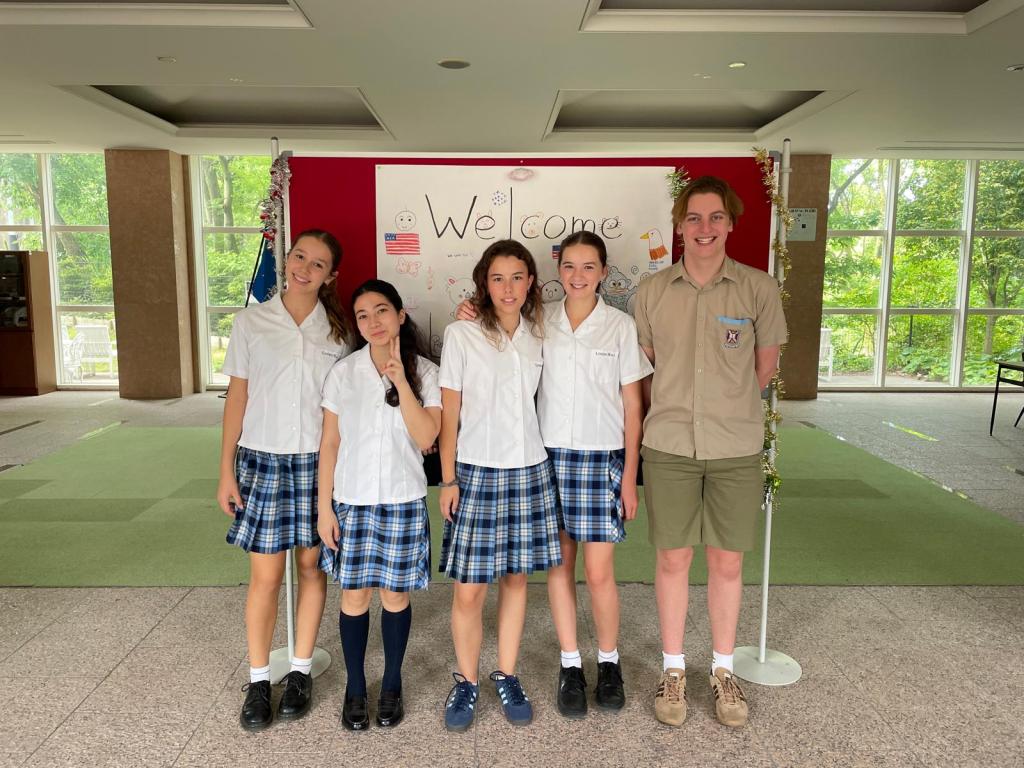
My first day of school was kinda nerve-wracking. I had spent my first two days in Japan getting over my jet lag, meeting my exchange partner’s family, and going to a super fun baseball game for the local Fukuoka SoftBank Hawks. I gave a short speech (in English luckily) in front of the entire school and got absolutely questioned for saying “soccer” instead of “football” (American English hatred) before they gave me my school uniform. Wearing a uniform to school every day was definitely a new experience for me, but I appreciated not having to pick out outfits in the mornings. We also had different P.E. uniforms, and there were several other dress code regulations that students were supposed to adhere to, such as restrictions on jewelry. Luckily the school didn’t care too much if the exchange students weren’t exactly meeting those rules, so I got to keep my earrings in! I had a bit of a weird schedule for a while but I went to a lot of my exchange partner Sona’s classes like Biology, English, Chemistry, World History, Home Economics, and more. At the dorms, we also had scheduled study time and time in the onsen (Japanese hot springs).
Although I spent a lot of time with my exchange partner and her friends, I was also able to get really close with some of the Australian exchange girls and with the other kids in our dorm. We still keep in touch. After school every day, we loved going to convenience stores like 7-Eleven, FamilyMart, and the big mall Aeon to try out various unique Japanese foods and snacks. We were also occasionally able to go by train to the main part of downtown Fukuoka and we had a lot of fun exploring places there. Many weeks into my exchange, I was really missing Mexican food, so my friend Emi and I bought ingredients and made a somewhat sad attempt at tacos in the dorm kitchen. We had to quickly devour our tacos and run to study time in the other dorm, but it remains a really fun memory.
One thing that I was worried about going on exchange was the food. As a vegetarian, I’ve had experiences traveling in foreign countries where it was very difficult to find options that I could eat. Luckily, not only was the school able to provide daily vegetarian options for me, but my host family was also very accepting and willing to go out of their way to find good alternatives for me.
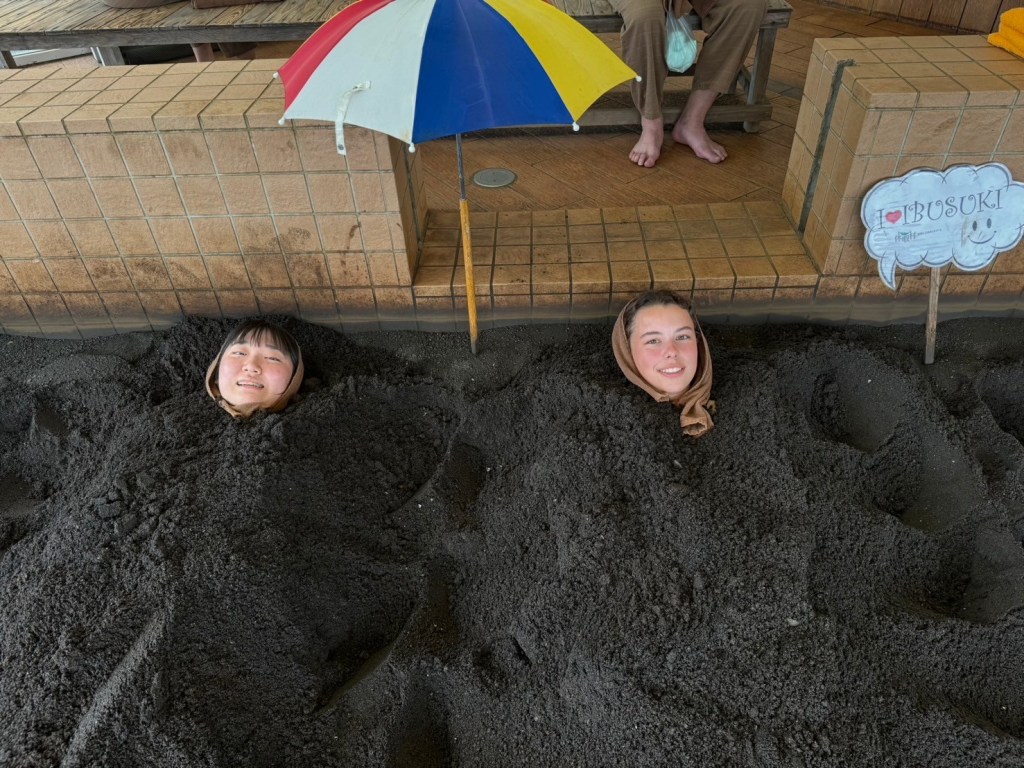
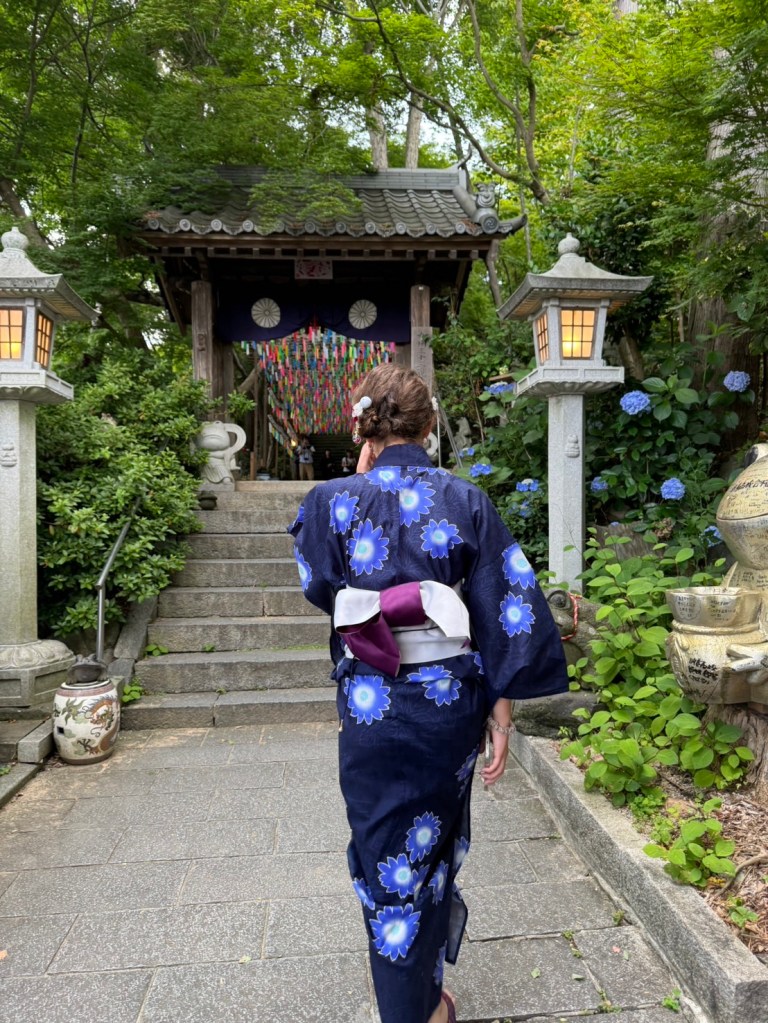
My host mom Naoko and host grandparents were amazing and extremely welcoming to me. They brought me to the best restaurants, took me on super fun weekend adventures, and took really good care of me while I stayed at their home. Some of the highlights of our adventures include going on a weekend trip to the hot sand baths in Kagoshima, visiting the famous pottery town Saga, and many different shrines. I also got to ride in the passenger seat with the third-fastest car racer on the Kyushu island of Japan for his warmup and victory laps at a car race organized by my host grandpa Jimmy, a former racer himself. We sang a lot of karaoke, ate the best agedashi tofu, went to a summer festival or “o-matsuri,” and dressed up in yukata. I can’t even begin to describe all the fun and amazing things we ate and did during my time there.
I noticed several cultural and familial differences throughout my exchange. For example, while I am used to doing my own laundry, in Japan my host grandma Barbie insisted on doing laundry for me every night I stayed at their house, which was something totally new to me. Also, sometimes if I was running late to school I would just buy a pastry at 7/11 to eat while I walked to school but that’s against cultural norms as it’s considered improper to eat and walk simultaneously. Be prepared for there to be familial or cultural differences in living and roles as a family wherever you go on exchange.
I would highly recommend exchange to every Athenian student as it is something that not everyone is able to do and we are extremely fortunate to have such a great resource and opportunity at our disposal thanks to Athenian. It really is a life-changing experience that isn’t common to get at this point in life. Even if you’re hesitant or the idea seems scary initially, just go for it! Unfortunately, I can’t exactly promise that your exchange will live up to every expectation that you might have, but even if it doesn’t, the experience of independence and living in a foreign country is invaluable. Also, it’s great to have ideas about where you might want to go, foods you might want to try, etc., but don’t set your expectations too high or try to plan out exactly what you want your exchange to look like, because not only will you quickly be let down, it’ll also leave no room for the unexpected and fun things that could spontaneously happen. My host family and friends in Fukuoka introduced me to all kinds of experiences I wouldn’t have found on my own. And it’s crazy to think that I now have a second family on the opposite side of the world. I will forever remember my time at Linden Hall, with my exchange family, and the amazing friends I made there.
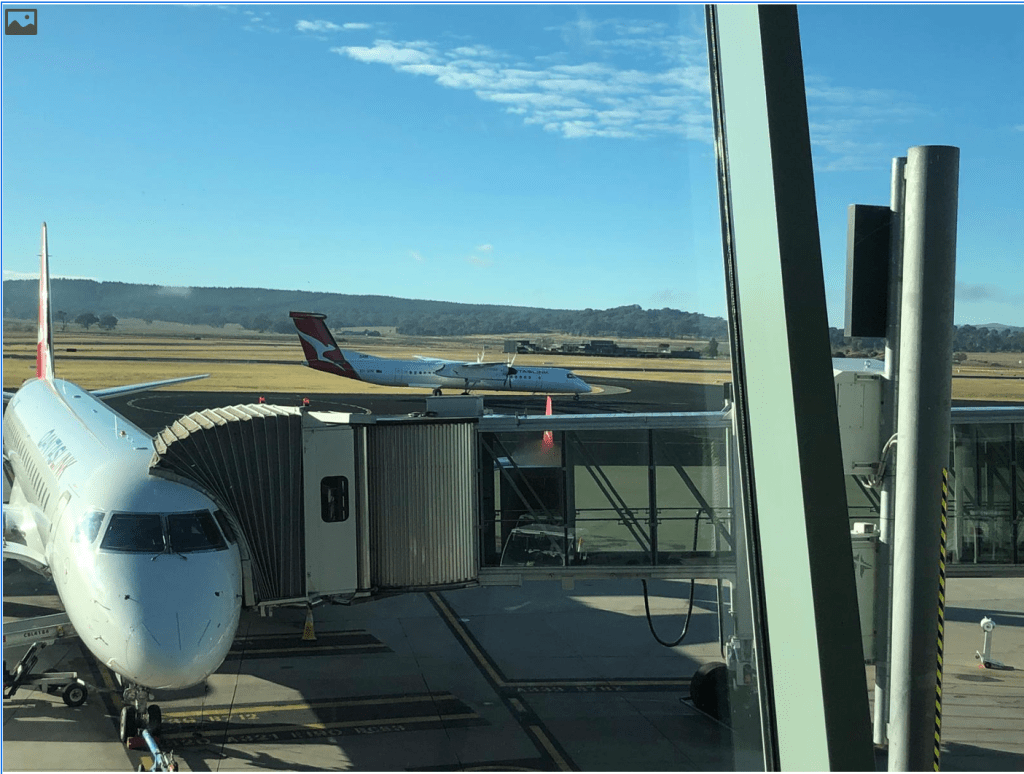
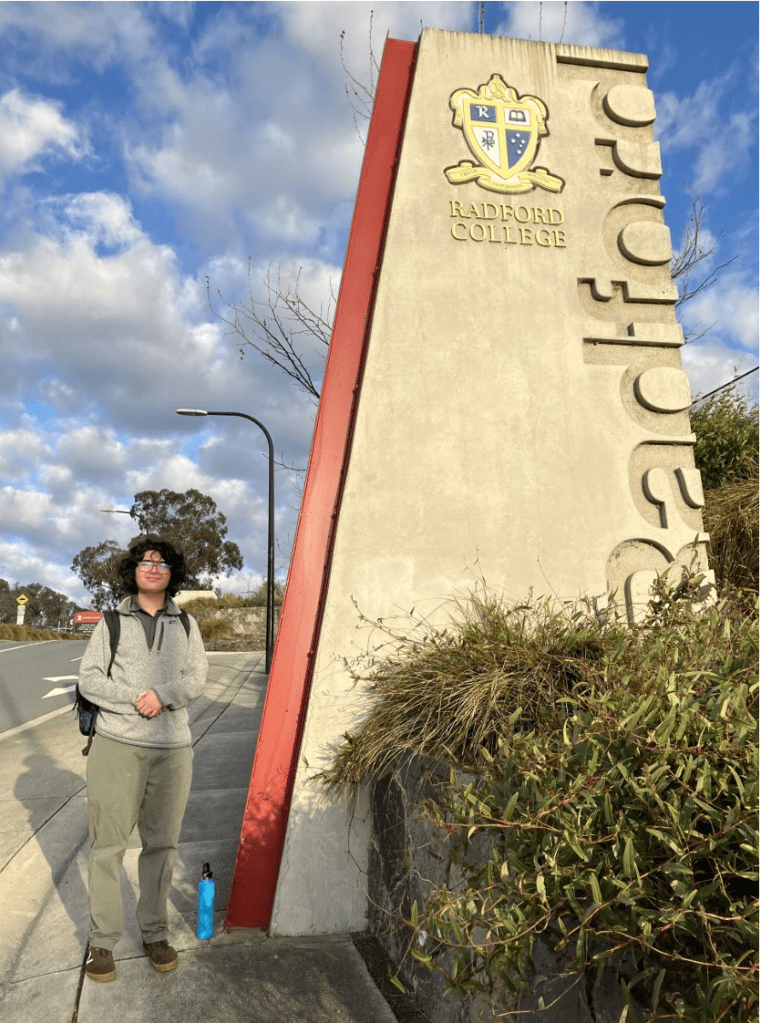
I am Oliver Abola (‘26, they/them), and I am on exchange at Radford College in Canberra, ACT (Australian Capital Territory), Australia. Radford is an independent Anglican school, which has about 450 students in years 11 and 12 combined. The reason I count these years together is because, within the ACT, these years are grouped together as “college.” During college, students usually do not change their courses, and it is the grades they earn during these years that principally contribute to their applications to university (what we commonly refer to as “college”).
Coming from America, I was quite surprised to find that I heard more about the upcoming American presidential election here in Australia than I had heard while in the US. My host family often listens to the news in the morning during breakfast and when driving to and from school. Combined with the fact that a significant portion of Australian news currently follows the US presidential election, I’m now much more familiar with the American presidential candidates. Additionally, I was surprised by how directly I have been asked my opinion on the election, even by people that I had basically never met.
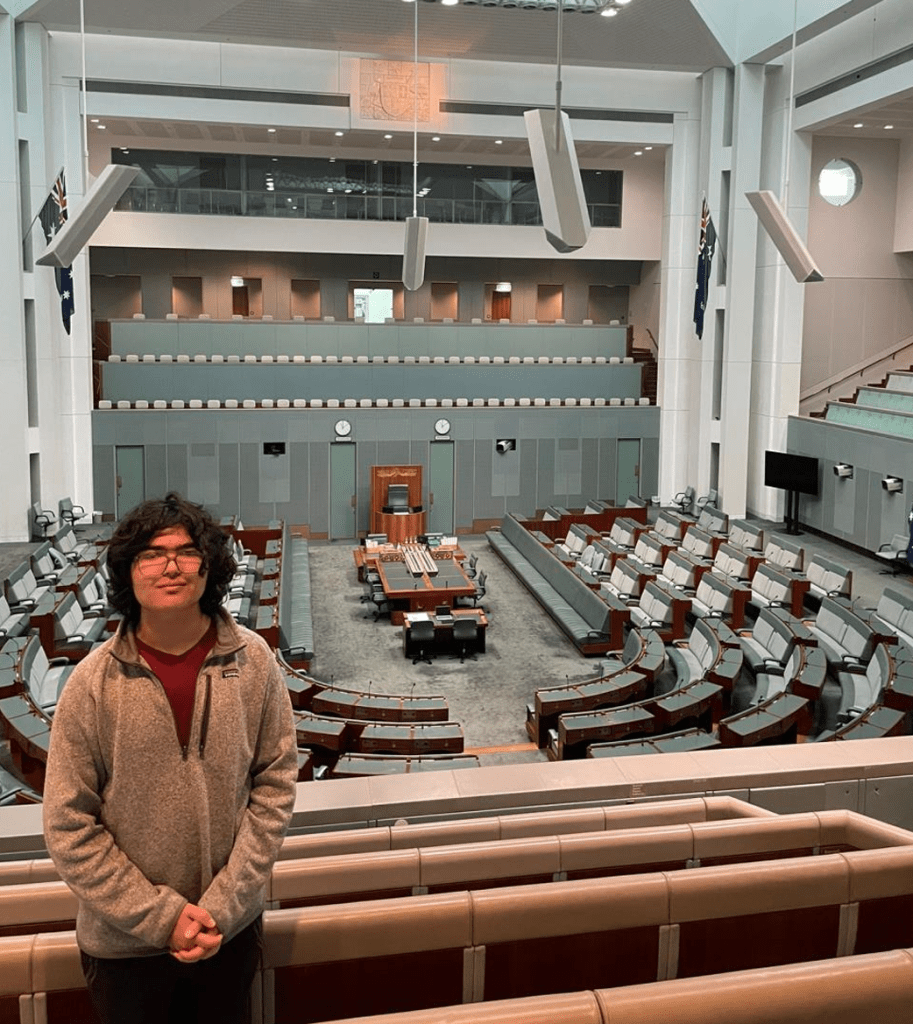
Another situation where I was surprised to hear about the US was in my tour of Australia’s parliament house! It turns out that they name their legislature after that of America, with the two chambers being called the House of Representatives and the Senate. These chambers are also led by the speaker and president, respectively. However, the system itself is mostly based on the Westminster system from the UK, except with a stronger Senate more akin to that of America. Because of this, Australia’s system is sometimes described as a “Washminister system.”
Everything I’ve told you about so far pales in comparison to my favorite part of the entire exchange: Dirrum Festival. Dirrum Festival, organized by Dirrum Dirrum, is an annual event, similar to a TEDx event, where several speakers give speeches on a variety of topics. Where Dirrum differs from a TEDx event, however, is its theme and topics. The annual theme of Dirrum Festival is ‘for the common good,’ and it often hosts speakers on a variety of social and political issues of the time. This particular Dirrum Festival had the focus “makarrata,” which in the Yolngu Matha language means the coming together after a struggle. This word is given special significance due to its use in the Uluru Statement from the Heart, “the largest consensus of First Nations peoples on a proposal for substantive recognition in Australian history” (ulurustatement.org). In addition to the Uluru Statement, speakers at Dirrum Festival spoke about topics such as addressing child sexual abuse, confronting the dehumanization of Palestinians, and responding to the disproportionate impact of climate change on young people.
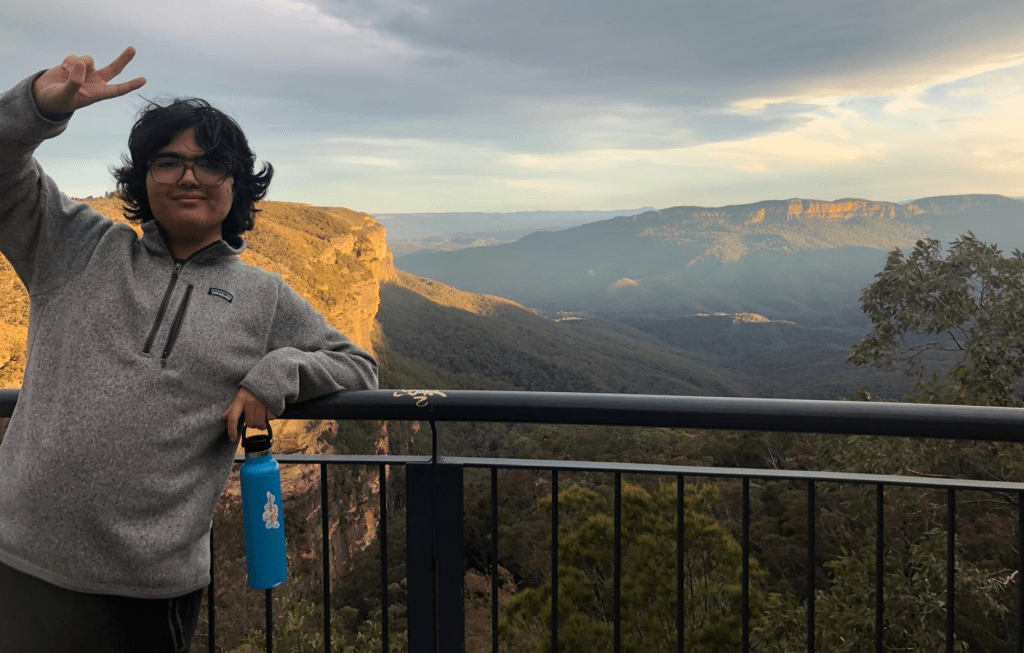
Overall, I have had a great time while on exchange. I have learned a lot about Australia, and the First Nations that came before it and whose people are still fighting for Voice, Treaty, and Truth. I have seen breathtaking views and architectural wonders. I have met people I never thought I would meet and experienced a school I never would have gone to. I have pushed myself out of my comfort zone. I have learned about the issues facing ordinary Australians, both large and small. So, now I wonder: if you went on exchange, what could you do?
Hi, I’m Eme, and I recently went on student exchange to Johannesburg (Jo’burg), South Africa. Flying solo for the first time from Heathrow to Jo’burg was both exciting and a bit nerve-wracking. Luckily, I was seated next to a super friendly South African couple, Melinda and her husband. They were so kind. Melinda even offered me gummy bears, which made me feel way more at ease. We talked about life in South Africa, and as we started to descend, I was struck by the sight of rivers below, gleaming like silver snakes in the sunlight. When I pointed it out, Melinda smiled and said, “It’s beautiful, isn’t it?” Her words felt like an invitation to embrace everything that lay ahead.
When we landed, I stuck close to the couple since I wasn’t quite sure how to navigate the airport alone. We eventually parted ways at immigration, but encountered an elderly lady in my line that guided me through the immigration process. The warmth of these people made me feel welcomed in South Africa right from the start.
My host family—Emma, her sister Caity, and their parents, Natasha and Leon—were amazing. They made me feel right at home in their beautiful ranch-style house, which had the perfect mix of contemporary and Africance elements. My room had a pink wall and a great view of the pool. The cozy pool house quickly became one of my favorite hangouts. I also got to know their housekeeper, Niki, and instantly fell in love with their four dogs: Dotty, Teddy, Kyju, and Licorice.
Jet lag is a real thing! It hit me harder than I expected and I ended up crashing for a few hours as soon as I arrived. But after a couple of days, I started to settle in. The meals were different but good—breakfasts of Weet-Bix or Future Life cereal, lunches of fish strips and salad, and dinners with lamb or pork chops (which I really enjoyed). One thing I had to get used to was the water quality; we had to boil it before drinking, which was something new for me.
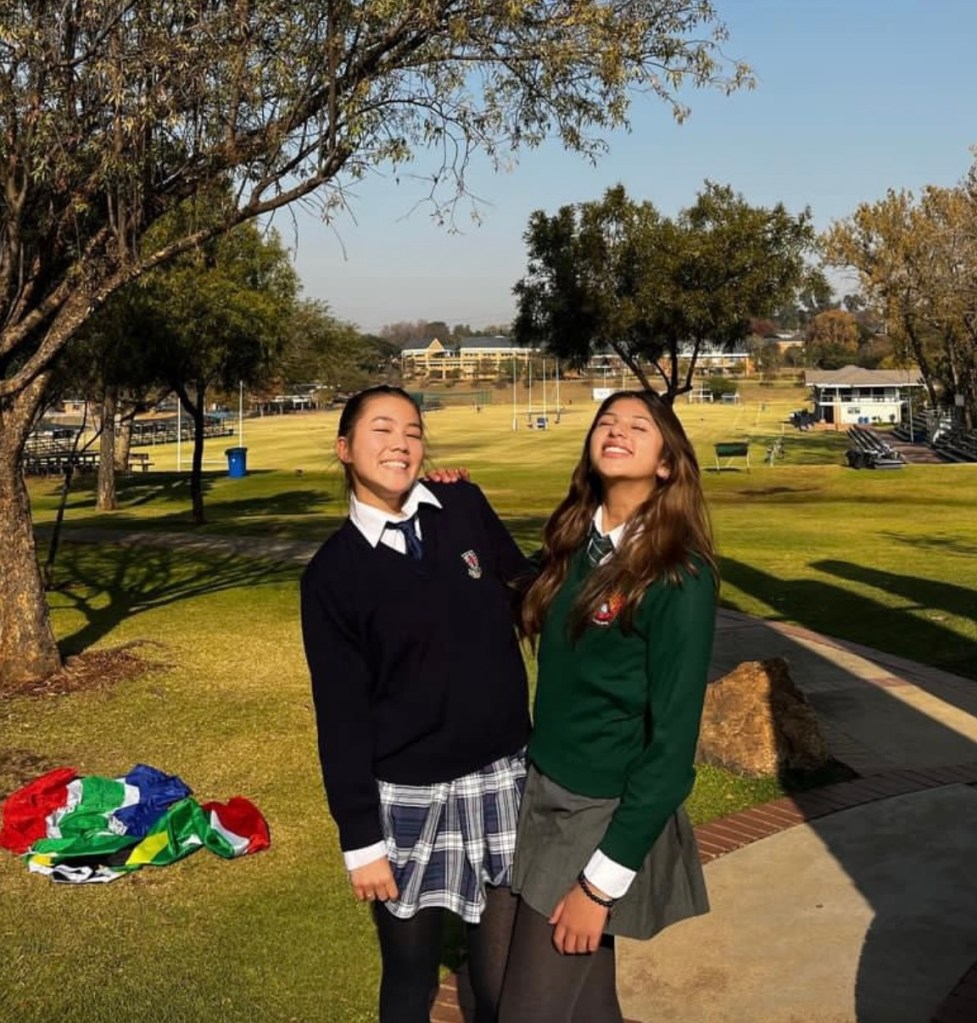
My first day at St. Stithians (Saints) on June 12th was a bit nerve-wracking. The uniform—blazer, tie, stockings—was so different from the casual dress code at the Athenian. It definitely made me feel like I was stepping into a whole new world. I shadowed Emma in her classes and I noticed that the atmosphere was more formal, with students calling teachers Sir or Ma’am and standing to greet them. Even though I was nervous, I started to get the hang of things, meeting other students and gradually expanding my circle beyond just Emma’s friends.
This experience was so much more than just going to school in another country. It was a chance to push myself out of my comfort zone and grow in ways I didn’t expect.
Screenshot
Adapting to a New Culture – Before I left, I was pretty worried about how I’d adapt to a new culture and a new place. But I was surprised by how welcoming everyone was—not just my host family, but also my teachers, restaurant staff, and the girls I met at Saints. It reminded me a bit of “Southern hospitality.”
As I traveled around South Africa, I noticed the big gap between the “haves” and the “have-nots.” There were lots of beggars on the streets, people waiting for work on street corners, and I saw many settlements where families built their homes bit by bit over the years. At first, these homes looked abandoned, but I soon realized that even though these families didn’t have much, they were living their lives just like we do. They woke up early, walked to work, greeted their neighbors, and had dinner with their families. It really opened my eyes to the idea that, even though we live differently, we’re all more alike than I thought.
Personal Growth – Over the two months I spent in Johannesburg, I made a real effort to talk to as many people as possible. At first, it was kind of scary to approach strangers, but the more I did it, the easier it became. I learned that stepping out of my shell wasn’t as hard as I thought, and most people I met were really friendly and kind.
Volunteering and Memorable Moments – During my last week, while Emma was busy with exams, I spent a few days volunteering at Hearts of Hope, a children’s home. I helped prepare food and organize activities for the kids. It was inspiring to see how dedicated the “house mothers” were to giving these kids a loving home. It showed me just how important community is when it comes to making a difference in people’s lives.
Saying Goodbye – One of the hardest things I had to do on exchange was to say goodbye to all the friends I made along the way, which at this point, had become family. For the last week or so, I was in a state of unceasing dread, not wanting to have to give my last hugs and I love yous to so many people I care about. One aspect that helped me cope was having my friends write letters to me on a South African flag to take home. It’s a symbol of the love I am immersed in, and even though I’ve left the country, the love will never leave.
Coincidentally, the day I said goodbye to my friends was the day I had to say goodbye to my grandpa, Gong Gong. He was not doing well in the hospital and he was ready to go. After his passing, I was wondering why I have to part with the people I adore most. That’s when I realized exchange was not only meant to teach me how to mentally push myself, but also how to let go. One of the purposes of exchange was to learn how to let go peacefully, without resentment that these people won’t physically be here to experience the rest of my life by my side, and to appreciate the small moments we had together.
Screenshot
Conclusion – Being in South Africa for two months was a once-in-a-lifetime experience I’ll never forget. It was a chance to grow, see the world from a different perspective, and gain independence. If you’re thinking about doing an exchange, go for it! My advice is to go in with a completely open mind and to give yourself grace when immersed in a new culture. It’s a leap of faith, but it’s an invaluable opportunity to experience change and growth in ways you never thought possible.
My time in South Africa has been amazing. I am in my third weekend here. I landed in the evening at Cape Town International Airport and met my exchange family and drove 45 min to the town of Franschhoek where they reside. Franschhoek is a beautiful town known for its wine and olive oil. The town is surrounded by beautiful mountains that have trails for mountain biking and hiking.
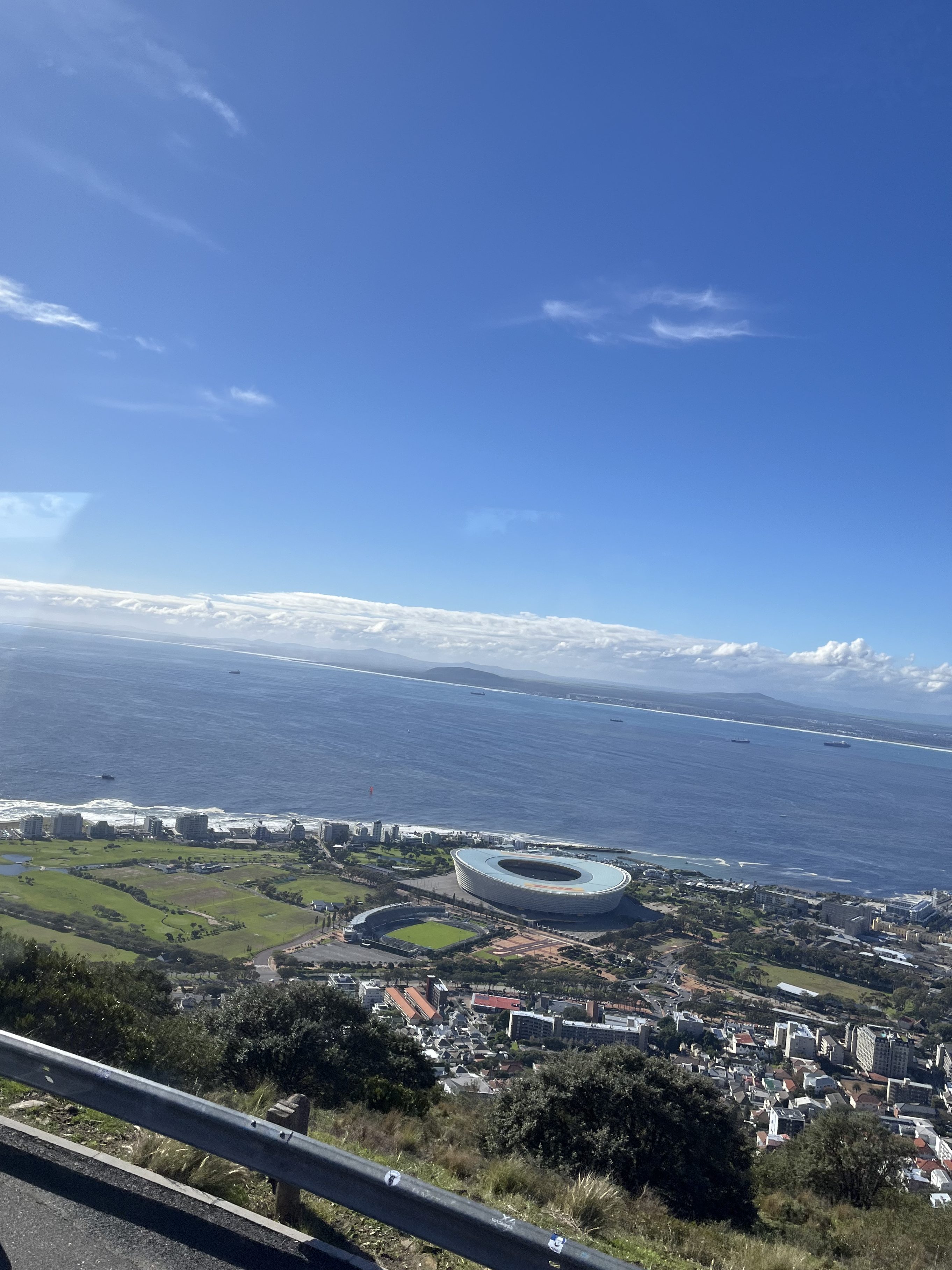
My first day in Franschhoek I was still recovering from jetlag and didn’t do much. On my second day in South Africa me and my exchange family went to Table Mountain in Cape Town. Table Mountain is a spectacular mountain that dominates the skyline of Cape Town and provides beautiful views of the ocean and the city. Due to winter storms and fog, the visibility was very poor; however, on the mountain I was still able to see native plants and flowers which was incredible. Later we went to Signal Hill which is another place for great views and the visibility was much better there.
My first days of school were a wonderful experience. I had to wear a uniform but due to the cold weather we were permitted to wear the school tracksuit which was warmer and more comfortable. Everyone at the school was very welcoming and kind. I was able to meet many people during my first week. I am taking classes such as accounting, Afrikaans, and geography, which are subjects I had never studied before in my life. I also joined the football (Soccer) team here at Bridge House, which allowed me to connect with more people. Playing football in the rain late into the night is definitely one of my favorite experiences during my time in South Africa. The football team competed in a derby with a school seven hours away in a town called Knysna. We went in tour buses there and stayed the night. This was an amazing time to spend more time with my team and create lasting friendships.
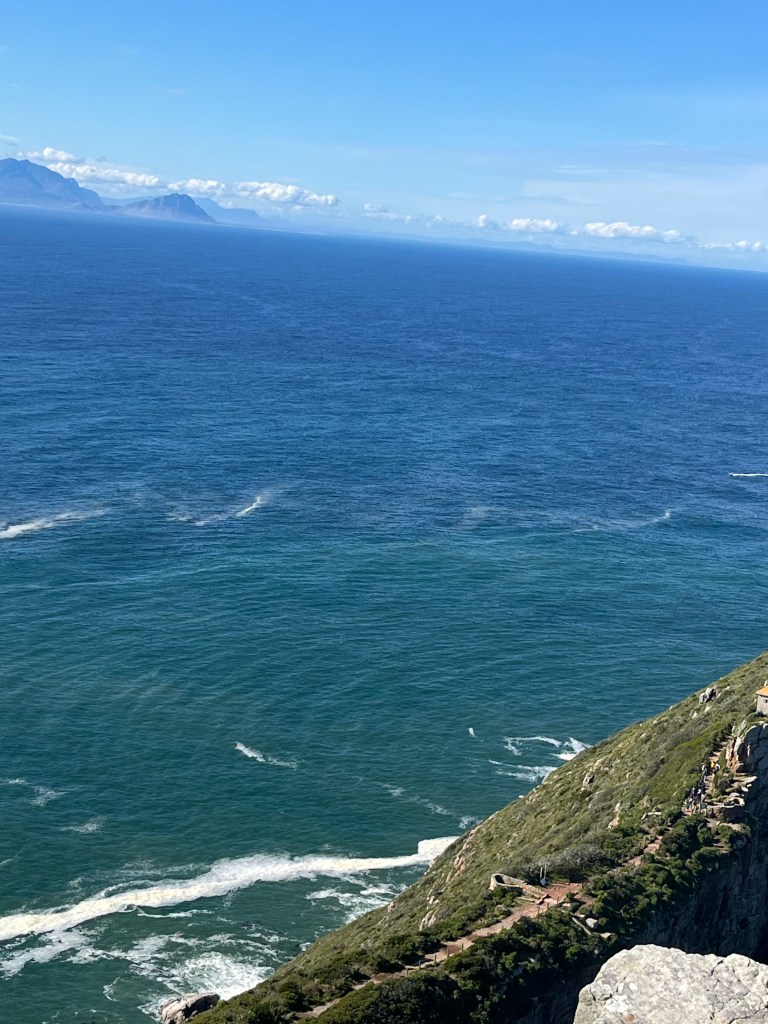
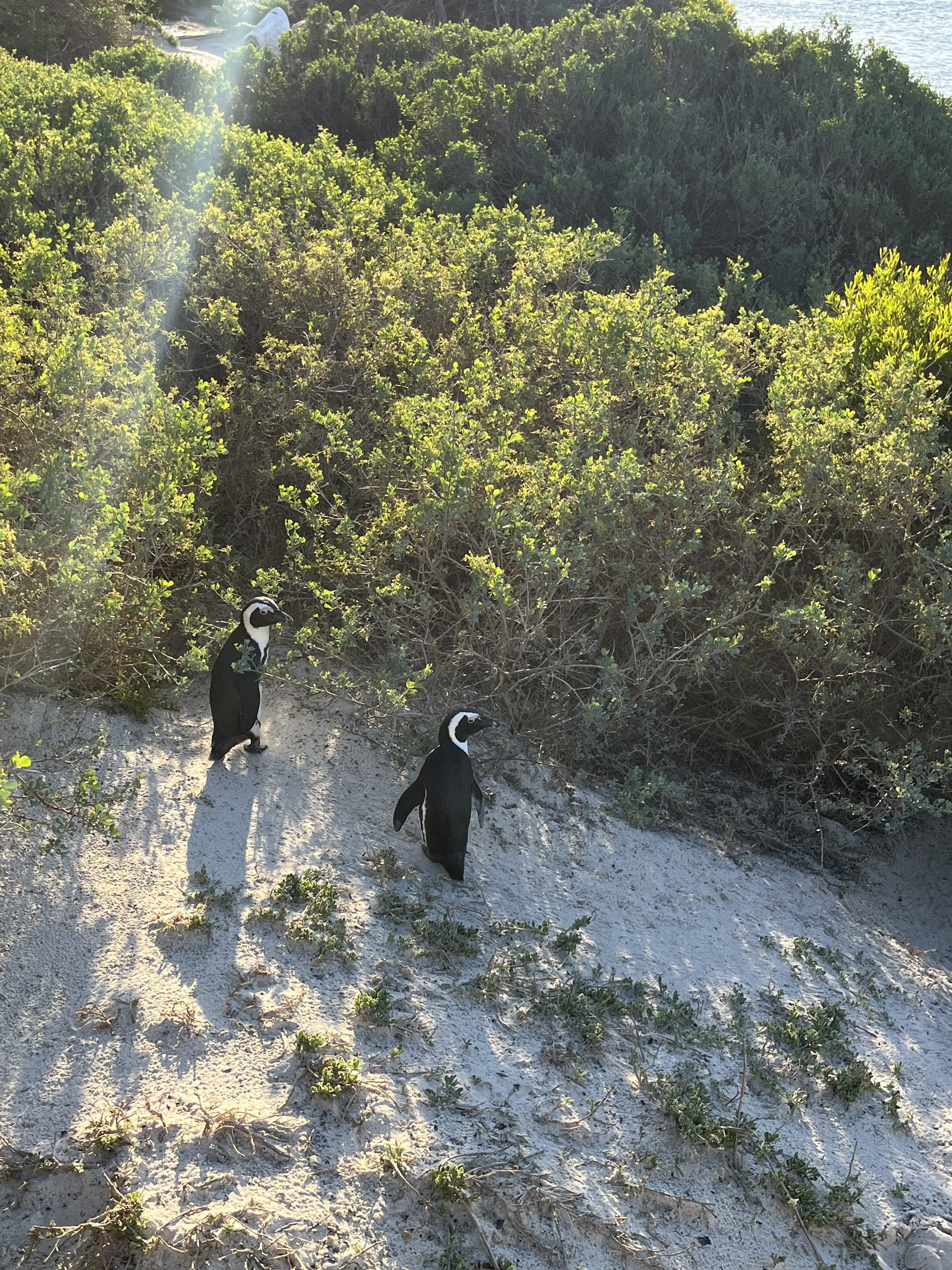
I have many memories of hanging out with friends in the town during the weekends and exploring the rest of Franschhoek. I also returned to Cape Town to visit the beach side and promenade as well as explore more of the city. My host family also took me to Cape Point, which is the most south western point in the African continent. Here one can see where the Indian Ocean and Atlantic Oceans meet and see more native creatures. I saw whales, penguins, seals, and baboons.
Overall, I’m sad that my time in South Africa is coming to an end, but I’m also looking forward to the many adventures in the coming weeks.
I am currently attending Bridge House School in South Africa and am having so much fun! When I arrived in South Africa, my exchange partner Natasha, her parents, and a couple of friends met me at the Cape Town airport. During the two weeks following my arrival, Bridge House was on a break from school and we took the opportunity to travel to Kruger National Park. We got to spend time together while camping in an entirely new environment for me. We saw beautiful sunsets, wild animals, and constellations I had never seen before. It was amazing to be able to see a little bit of the wilderness in South Africa before heading back to Franschhoek to begin the term at Bridge House.
Leopard in Kruger National Park
So far at school, I have been able to take classes like Afrikaans and make new friends from all over South Africa and beyond at Bridge House. I am having so much fun on exchange, and can’t wait for more adventures to come as my time here goes on!
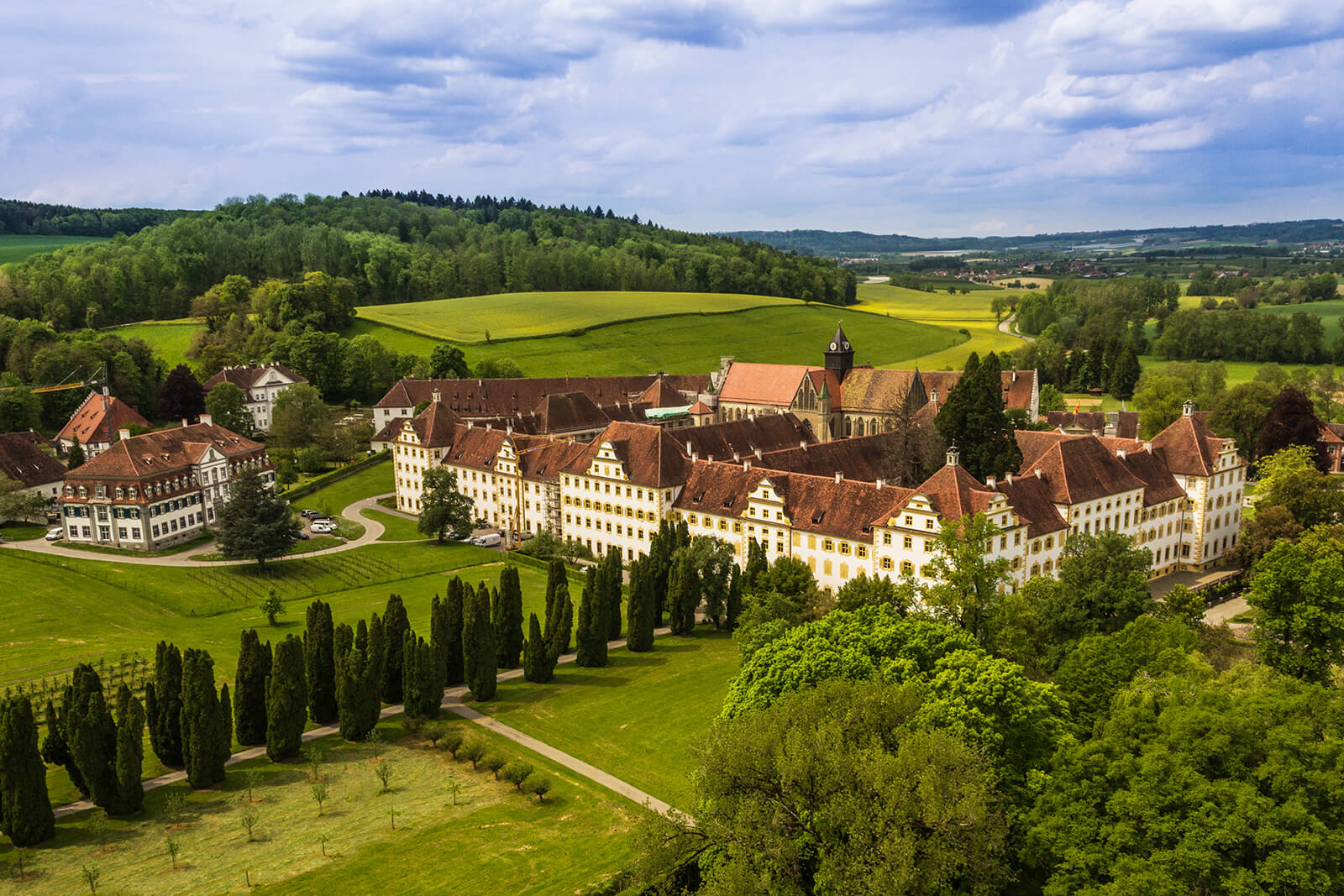
I spent my spring semester at Schule Schloss Salem, a boarding school near Lake Constance in Germany. Salem and Athenian have organized countless student exchanges for many years. In 1932, Athenian’s very own founder, Dyke Brown, also studied at Schule Schloss Salem. At the time, the head of school was Kurt Hahn, founder of Salem, Round Square and Outward Bound. Here, Dyke Brown learned from Kurt Hahn the principles of community service, globalism, and spending time outdoors. Athenian’s IDEALS are a direct result of what he learned at the same 14th century monastery where I have been for the past few weeks. Another neat connection is that my great-great grandfather on my dad’s side, who is German, was a teacher at Salem a few years later.
Schule means school, Schloss means castle, and Salem is the name of the town where the school is located.
Even though I’ve been to Germany before, living in a boarding school was still a very new experience for me. At Athenian, there is some freedom in choosing what classes you are interested in taking. Here, there is a much more limited choice. My classes here were Math, Natural Science, Chemistry, German, History, Physics, Health Education, Sports, English, Sociology, Art, Ethics, and Geography. Unlike at Athenian, most classes take place only once a week. Another difference is that you are with the same people in all classes except for ethics.
I have noticed many cultural differences, particularly between Athenian and Schule Schloss Salem. It is a very formal atmosphere here. At the beginning of every class, we stand up to greet our teacher. We wear uniforms (school polo, sweater, and jeans) and every room has a chore to do each week, ranging from taking out the trash to washing the dishes. Every evening, we turn in all of our electronic devices, and don’t get them back until after classes end, which is usually at 4pm or later the next day. This helps students connect with each other instead of being on their phones.
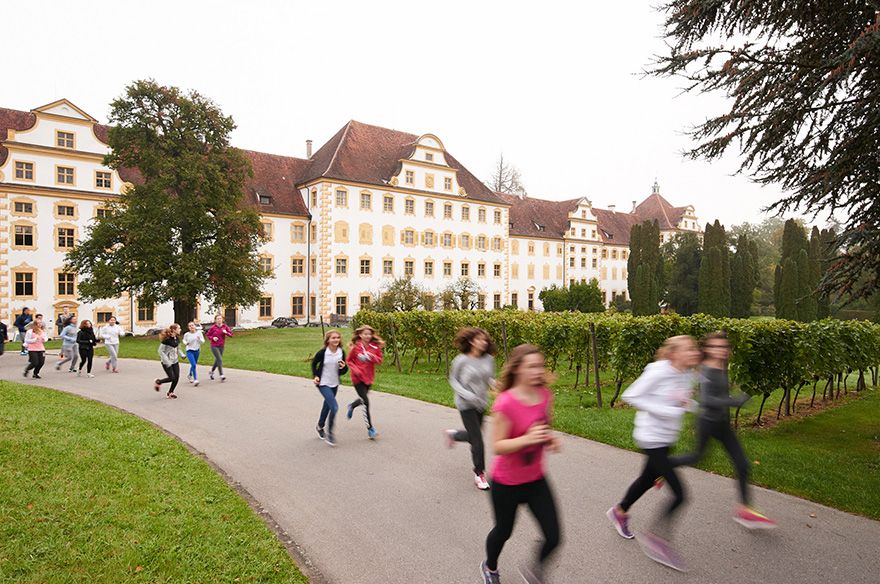
We have school all day Mondays to Fridays and half day on Saturdays. Each class period is 90 minutes long and we rarely get breaks. This is one of the aspects of Salem that took me a while to get accustomed to. Athenian emphasizes spending time outdoors through programs like AWE. Salem also believes that exercising is a key aspect of one’s education. What does that look like here? We wake up every morning for a mandatory 6:45 am run around campus. Who needs coffee?
After our morning run, we have five meals every day: first breakfast, second breakfast, lunch, snack, and dinner. First breakfast and lunch are mandatory for all. During lunch, a school speaker will ring a bell, and no one speaks for a few minutes. All you can hear is the clinking of utensils against plates. It is a moment of silence in appreciation of having a warm meal.
One of Salem’s unique programs are their service groups, which ranges from fundraising in the Round Square service group to learning basic skills in First Aid to practicing firefighting skills in the Fire Brigade. I joined the First Aid group and practiced teamwork, communication, and first aid skills. Another major valuable part of my exchange has been the opportunity to continue improving my German. All of my classes are taught in German and I’ve managed to keep up.
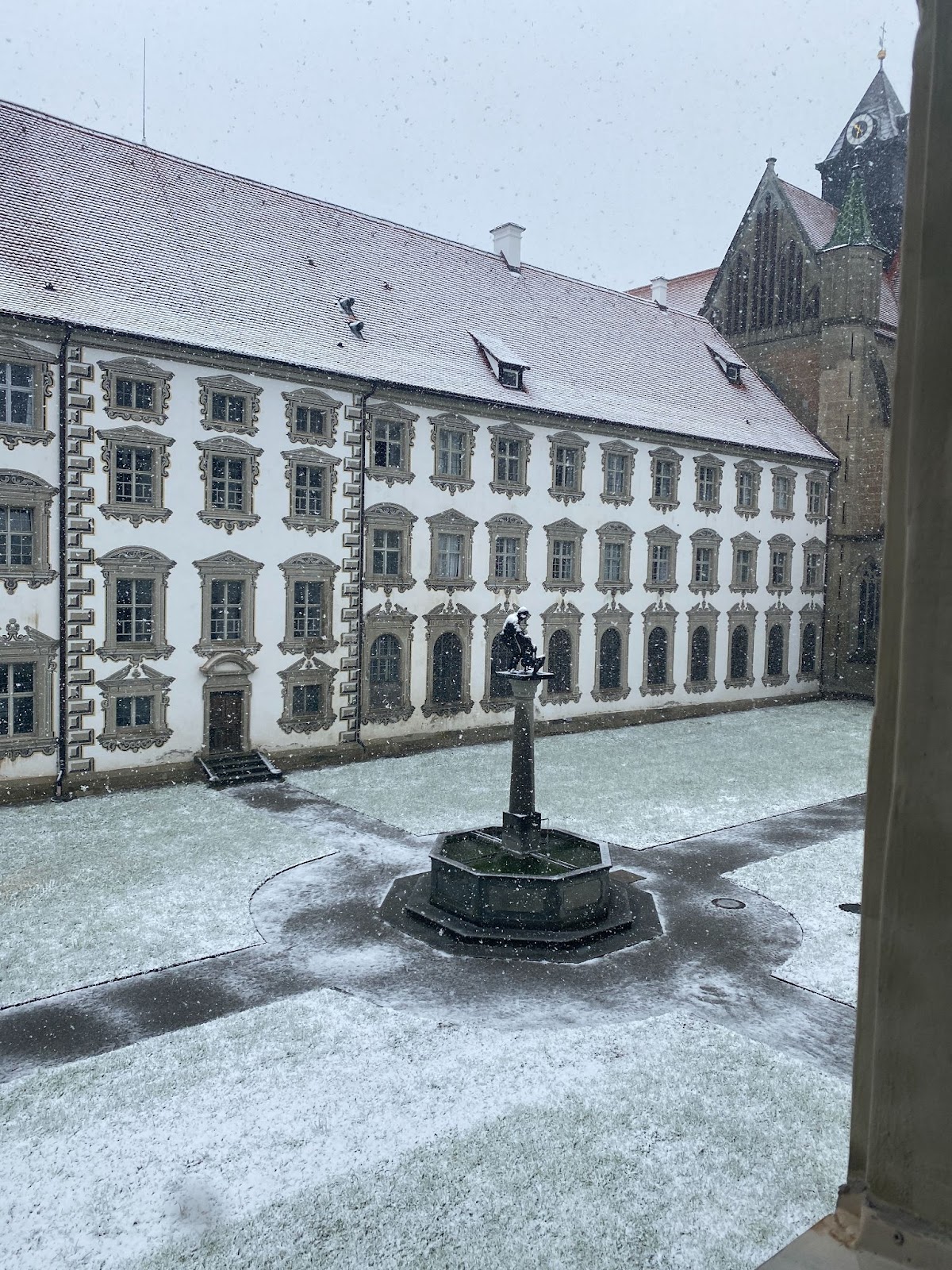
I woke up one morning, opened the curtains and saw snow. It was beautiful.
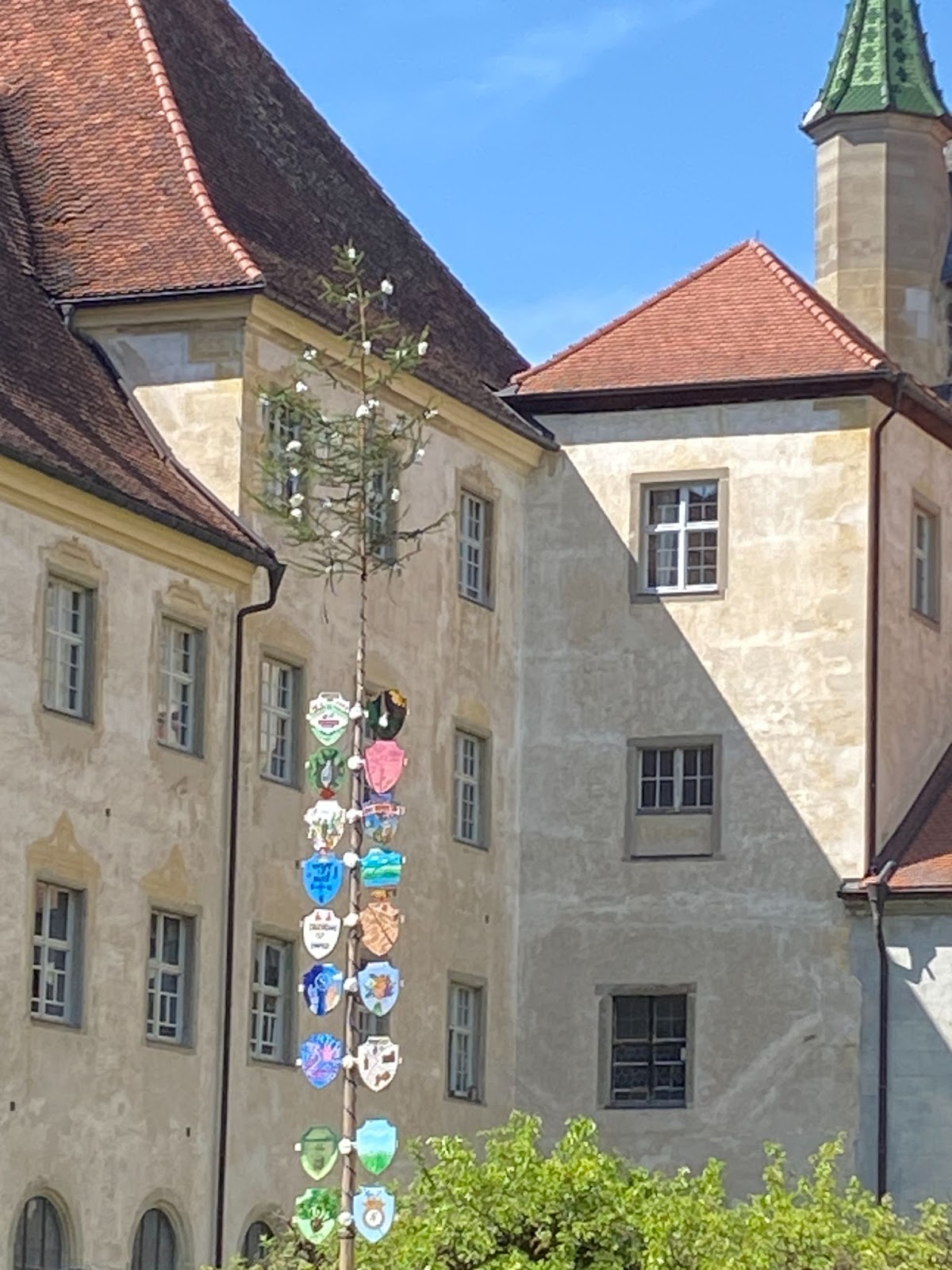
During my time here, some special Salem traditions took place. During Salemer Weekend, we had a football (or as we call it, soccer) tournament between all of the wings. The rest of the time was spent with everyone’s own wing. In mine, each room cooked either an appetizer, main course, or dessert. It was really nice to cook, eat, and just spend time together. May Day (May 1st) is a public holiday in all of Germany. We had no classes, and each wing presented their Coat of Arms, which were then attached to a maypole in the main courtyard. Last week was Kevin Week. It was an opportunity for students to gain more independence. Our mentors and teachers were present, but students taught classes, and wing assistants took on responsibilities that the mentor usually does.
This is the maypole with a coat of arms from each wing.
Over the past few weeks, I have grown closest to the students in my wing. There are students from Thailand, China, and Germany, as Salem is a very international school like Athenian. I have met people from both the German and English systems, whether it was during a weekend rock climbing trip or during swim practice. In addition to weekend activities and sports practices, my friends and I hang out in our wing or in the club house, which is open on the weekends for students to have a little dance party. On Saturdays, I go to the nearby city of Überlingen with my Salem exchange student, Florentine, and her friends. On Sundays, nearly all stores, other than some restaurants, are closed.
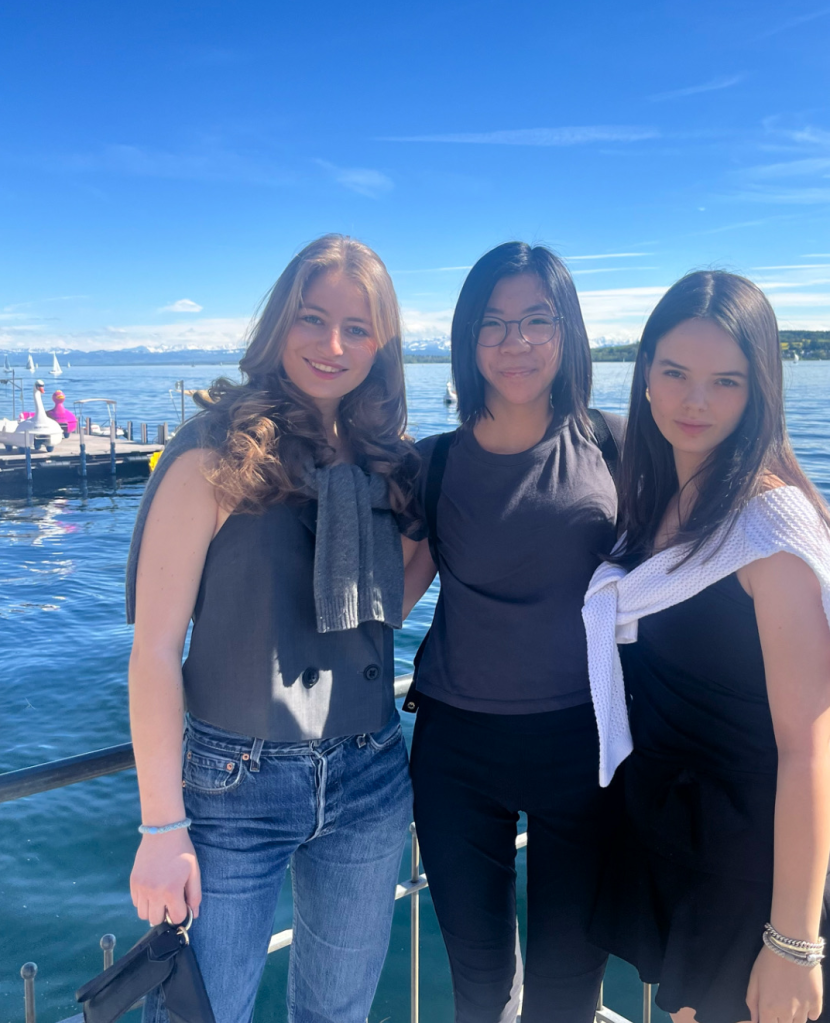
I went to Überlingen with my exchange partner, Florentine, and her friends. We spent time at Lake Constance, where you can see Switzerland across the water.
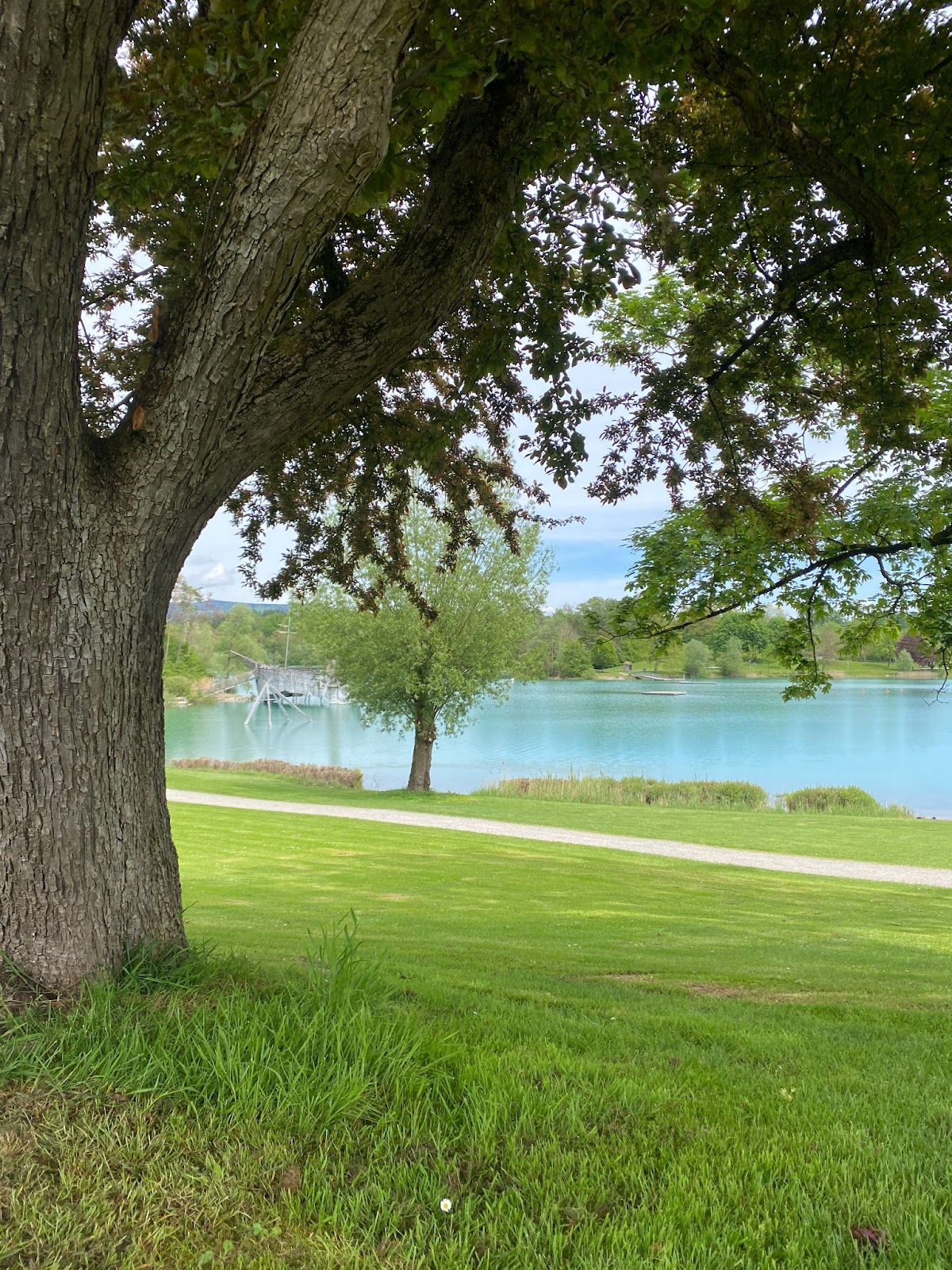
When you need to do a quick grocery run, you can walk 30-40 minutes to Salem. Edeka is the primary supermarket most students go to when they need to buy something to cook. One difference is that in Germany you have to rent a shopping cart. Nearby is the Schlosssee, another small lake that gets really crowded in the summer.
I would highly recommend going on exchange. Not only will you improve your language skills, or maybe learn a little of a new one, but you will make many international friends. My advice to students going on exchange would be to put yourself out there and get to know as many people as you can!
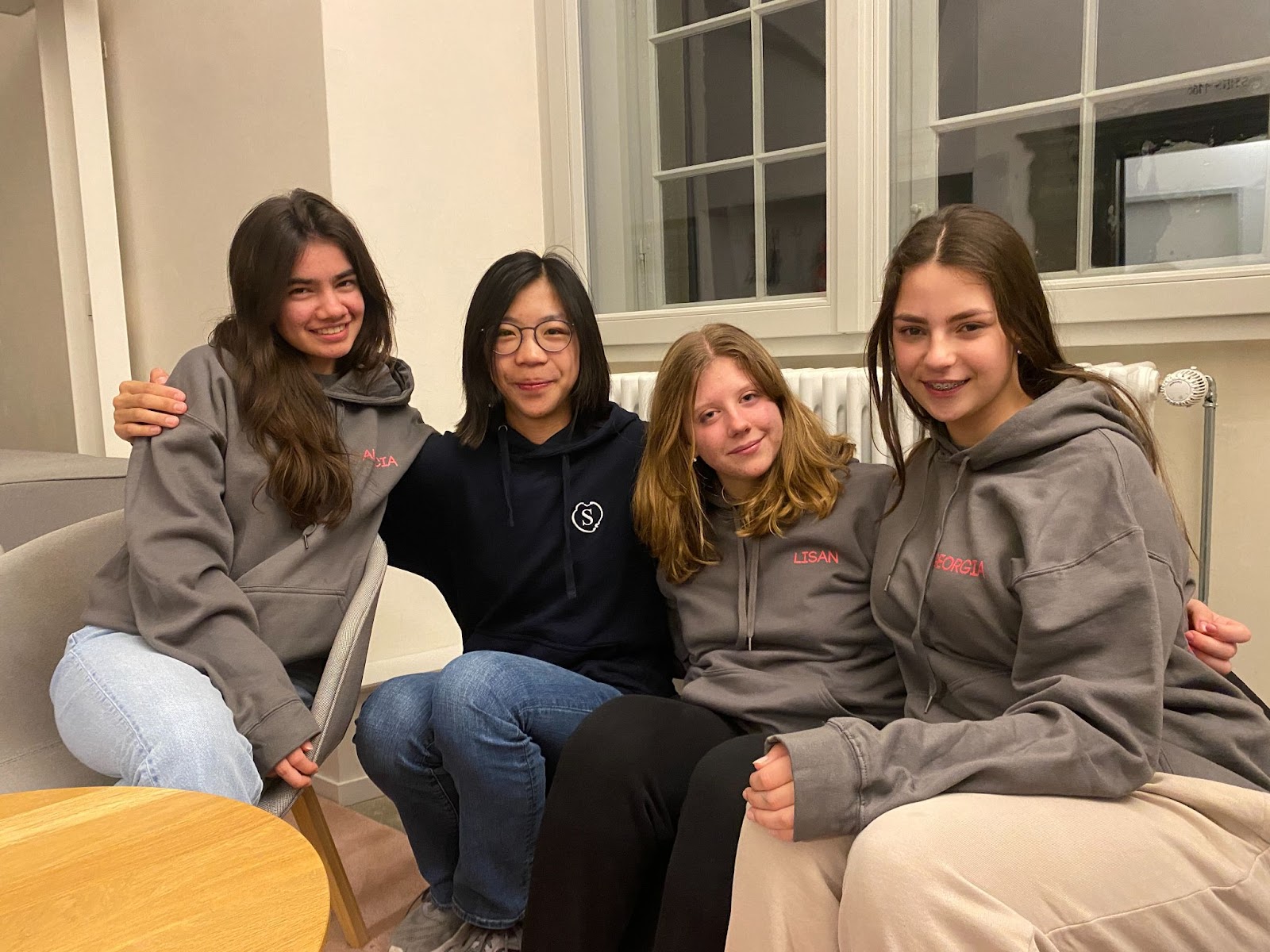
Group picture with some other students in my wing!
My time in Colombia so far has revolved around meeting new people, going to new places, and trying new things (specifically food). I arrived in Bogota on a redeye flight without a wink of sleep. From when I arrived at my host family’s apartment to when I slept, I was on my feet: going to eat, visiting the local country club, and shopping for groceries. Thankfully, my host family made it all enjoyable and entertaining. I arrived on the day of my mom’s birthday and it was very difficult and emotional as I called my family in the afternoon. In Colombia I would be missing my mom’s birthday, Mothers Day, my 16th birthday, and my brother’s birthday. Knowing this made the start of my exchange a little harder to cope with, but I did my best not to let that stop me from enjoying the time I had in Colombia.
The next day started at 5:00 in the morning because of the traffic in Bogota and the 7:10 start time for Los Nogales (the school I’m going to) but getting enough sleep hasn’t been a problem during my exchange. My exchange partner, Emilio, is not in the same grade as me so I was assigned a mentor, Mateo, to introduce me to teachers and accompany me in classes. The way Colombian school works is that high school consists of 10th-12th grade while middle school is 6th-9th and in turn means I hardly get to see Emilio. My mentor made up for this by introducing me to his friends, making jokes, and providing a positive atmosphere that kept me included. My first day wasn’t perfect but very enjoyable, consisting of random people introducing themselves to me, meeting my teachers, and everyone telling me the same thing, “Wow your Spanish is so good!” and “Where’d you learn Spanish?” I was lucky enough to have learned Spanish from my parents, but it soon became evident that even my level of comprehension wasn’t enough to get through the students’ slang and conversations riddled with inside jokes. Strangely, I wasn’t nervous or scared for my first day. I guess some part of me had understood that I would be in a lot of uncomfortable situations during my exchange so I might as well embrace it and not worry.
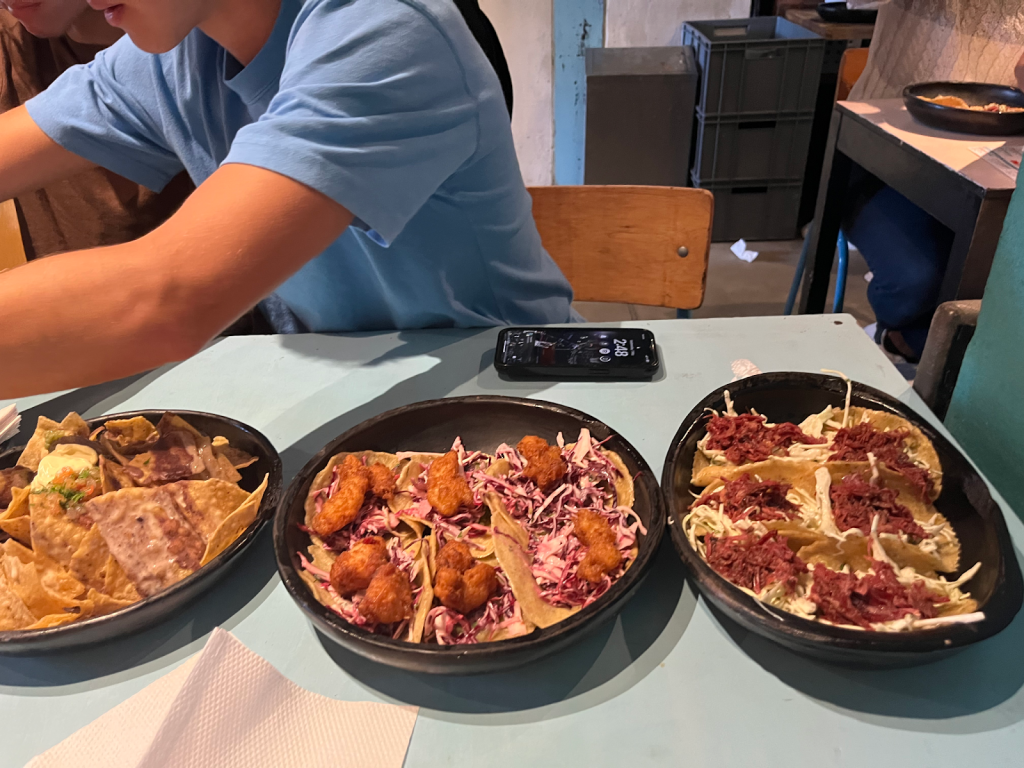
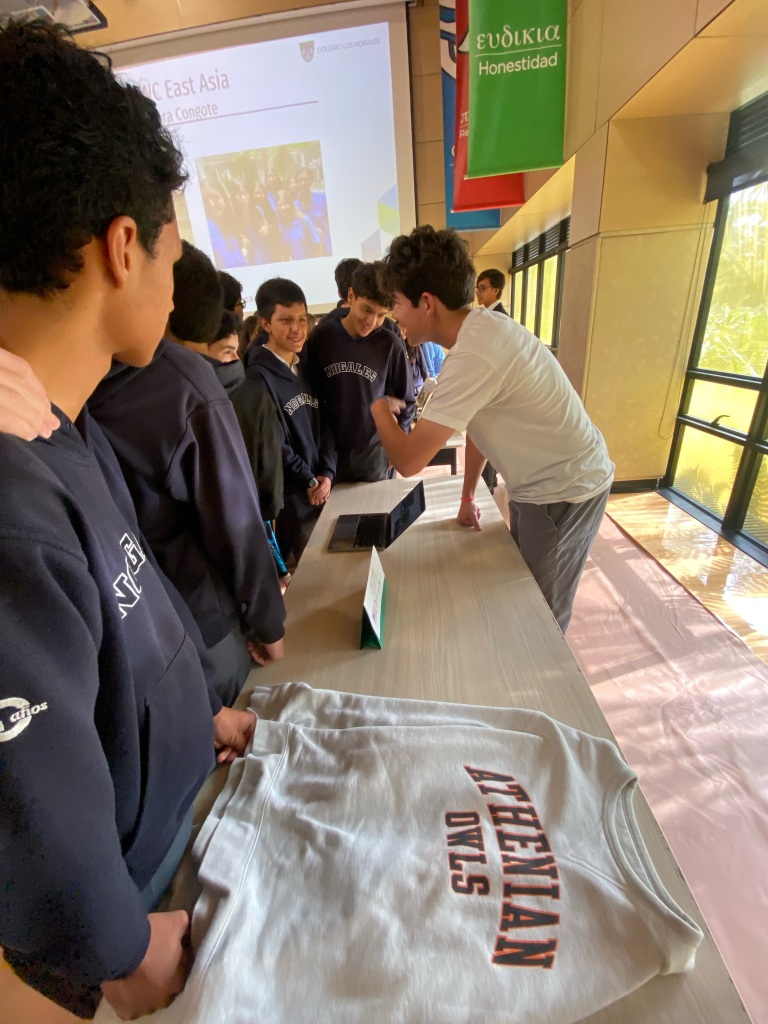
I’ve only been here for two weeks but I’ve already made so many memories. I didn’t know how to list them all without being boring so here it is. I’ve made a bunch of new friends and met lots of new people. Mateo and I are more like good friends now instead of mentor and padawan. I’ve tried so many kinds of arepas, a Colombian flatbread bread made out of ground maize dough, such as arepas choclo, arepas de queso, and arepas de huevos. I tried a dish of ground beef, chicharon, beans, rice, and arepas called bandeja paisa. Emilio took me to an unlimited taco restaurant where I ate 20 tacos. I went to a chiva, essentially a party bus, a soccer game where the Millionarios, a local team, played and won. I gave a presentation about Athenian to the entire school, and ate at the restaurant Crepes and Waffles with the other exchange students here. I visited a Finca (country house) in the outskirts of Bogota with an incredible view where I had burgers, rode and almost crashed an ATV, and played on a very dangerous swing. I’ve gotten invested in basketball, watching Emilio’s matches and playing during class. And all of this was in the first two weeks. Next week I’ll go to Santa Marta on the coast of Colombia to enjoy the beaches and relax with my host family. In the coming weeks I have two quinceañeras along with multiple dance lessons to prepare myself and a lot more memories to be made.
Colegio Los Nogales is not too different from Athenian except for their 50-minute classes, 7:00 am start time, and extremely efficient bus system that drops me off at my host family’s apartment after school. The campus is similar to Athenian, large but not difficult to navigate. There are buildings that have more than one floor, a lot of the architecture is really beautiful, and all my classes occur in one building. The atmosphere is very welcoming. Everyone here was eager to meet me and learn a little bit about California. There is a uniform, but it makes choosing an outfit each morning so much easier–and pajama days here have real meaning. In the end it’s a normal school like any other where students strive for good grades and enjoyment, but their life outside of school is much more lively with weekly parties and events. After two weeks I was almost fully accustomed to life in Colombia, waking up, going to school, doing something fun, and sleeping. (It’s more interesting than it sounds.)
My host family has been one of the biggest highlights of my time in Bogota. Since the first day I arrived, they treated me like one of their own and our conversations at dinner are always lively. Both of my host parents work in education (the dad is the director of Colegio Los Nogales) and have interesting perspectives and questions about my life in California. They’ve taken me to eat and watch movies, always making sure I’m comfortable. Emilio has also been like a brother to me, chatting and laughing about whatever comes to our minds.
I don’t think I could ever regret coming here. It wasn’t easy to assimilate into a culture so different from mine and it can’t be made easier. That’s the beauty of exchange. The amount of times I’ve had to go out of my comfort zone has only ever made my experience better and everyone has been happy to help me out. In the end, if anyone has any doubts about going on exchange I’d tell them one thing. Just give it two weeks.
Hi. I am Frankie and I traveled to San Silvestre School in Lima, Peru in June and July of this year. Before arriving at the school, I remember being excited and nervous. It was an all-girls school with a uniform and strict rules such as no phones. It seemed so daunting to me as it was very different from Athenian. I arrived with low expectations as I didn’t know how I would branch out with new friends and find my place. Me and my exchange partner were quite different people and I didn’t think I would find many commonalities with her friends.
The first day I walked in looking at the building with three enormous towers of stairs, giant hallways, rows of lockers and five floors. There were tons of girls walking quickly, talking in a language I could barely comprehend, dressed in a Christmas-colored uniform with their hair tied back in a ponytail. I was overwhelmed and nervous. I got to art and needed to get my headphones from my locker. I ran down five sets of stairs, turned the corner and saw lockers labeled 60-80. Mine was number 10. I turned the corner and walked halfway but couldn’t find it. I quickly ran back up the stairs, my face heating up and thinking “this is going to be awful.” I already lost the location of my locker. Sitting back in my chair, I gave a forced and nervous smile to the teacher and said, “I don’t think I brought headphones today. Sorry”.
I look back on that first day and tell everyone that wants to go on exchange to be open-minded. Just the next day I talked with people and made friends. Everyone was kind and curious about the US and California. I soon became close with the family I was staying with and they were very kind. The first week I went on a camping trip for three days, going white-water rafting and ziplining. I made another close friend and befriended a couple other exchange students. The following week I settled in with a friend group of about ten girls who all were so nice and fun to hangout with. The next weekend I hung out with friends Friday and Saturday, completely forgetting about how nervous I was on the first day, just enjoying the moment, going to malls and people’s apartments.
I settled in nicely but after three weeks I needed to switch grades as my grade had exams. I wasn’t excited for the switch as I knew not a single girl in my new grade. I was able to find another friend group by talking to people in class and making conversation. The new group was so sweet. They brought Peruvian food for me to try and invited me to go out with them on the weekend.
I think everybody should consider going on exchange. The cultural shock is huge but it is so worth it. I learned so much more Spanish, learned about new traditions in Peru, made so many friends who I am already planning to see next year, and visited many different small towns outside Lima. I think exchange might not be for everyone, but I think everyone should think about it, as it was one of the best experiences of my life.
My best piece of advice for going on exchange is to be open minded. When someone asks you for your name, ask for theirs. Make small talk, ask to sit with someone for lunch, join a club or a sport, try new food, step out of your comfort zone. If the country doesn’t speak your language, try and learn some of it and talk to new people. I saw students on exchange who clung onto their host student and didn’t talk to other people, as they were worried about their new environment, and they didn’t have the best experience. Step out of your comfort zone. Trust me, it is worth it. Also a small tip: buy a flag from that country to get everyone to sign on you. My host family bought me one and it’s a great thing to remember my trip. I recommend everyone consider going on exchange. I loved it so much and am very excited to go back to Peru!














 The Athenian School Exchange Blog