Traveling to South Africa has been a roller coaster of
emotions. I arrived in SA with my family nine days before the school’s winter
term started. We saw vast canyons, Lucky’s potholes, animals while on safari,
and the enormous Victoria Falls. A quick peak into the touristy side of Africa
let me know that there was loads more fun to come.
The first day without my parents was scary, but the sweetest
thing happened to me. That night instead of being alone in the boarding house
with no family or friends, a group of girls from the 10th grade
invited me out to dinner. That simple gesture was the first of many and the
start of my exchange. It took a while to adjust to the boarding house because
of all the rules, but it also allowed me to bond with the other exchanges. The
first week was really interesting and a huge surprise to me. There are
currently four other exchanges who I have become close with (from Canada,
Australia, Japan and Scotland). Jhana, Katie and I had to participate in a
fashion show and attend practices in the very beginning of our exchange. It was
a lot to be thrown at us not knowing anyone and have to strut down a stage, but
we all got the hang of it and soon were having just as much fun as the other
girls.
Along with the differences in rules in the boarding house,
I’ve noticed differences in cultures. I sometimes disagree politically with
people here in SA, but it’s helped me acknowledge my bias. The school culture
is also a bit different. Athenian and St. Cyprians both want strong bonds with
teachers, but here there seems to be a clear line between grades. The main
differences are that it’s an all-girls school and a lot of the students speak Afrikaans.
My favorite part of exchange so far has been the Red Bus. My
host and the other exchanges got on this huge double decker bus and rode around
in the top half. It was quite windy, but I was able to talk to Mila (my host)
and see the city. I was able to see spider monkeys, cute penguins, beautiful
gardens, and pretty mountains all in one day. Another highlight was going to
Boulders Beach and Cape Point. The beach is a national park and it is filled
with penguins. Being a few feet away from adorable baby penguins was
incredible. Afterwards we drove to Cape Point, where the Indian and Atlantic
Oceans meet. While there I saw an ostrich farm right as the sun set.
Another one of my favorite weekends was when a girl invited
all the exchanges and some of her friends to her beach house in the Grotto.
Their beach house was amazing and right near a national park. I was able to see
giraffes and the beach in one day. On a weekend the school hosted for
exchanges, we were able to go to the Aquilo Reserve and see lions and rhinos.
After the safari we went zip-lining over rushing rivers and along the mountain.
That weekend also helped all the exchanges get to know each other really well.
Along with the amazing sites, I’ve been able to meet so many amazing people. It’s been so fun learning the lingo South Africans use and just what it’s like living in Cape Town. Despite being worried about the food in South Africa (since I am vegetarian), my host family has been really helpful with giving me meat substitutes and making sure I never go hungry. The only difficult thing to cope with is my sleeping habits. In the summer I normally wake up really late and I’ve had to wake up early for the busy weekends, but it’s been well worth it considering all the places I have seen. I’ve been here for seven weeks now and I would definitely recommend going on exchange. Even if you’re more introverted like me, it’s an amazing experience.
After a 14-hour flight and a two-day stop in Sydney to visit my aunt and uncle, I felt confident and excited about the adventures I would have on exchange. During the five-hour flight from Sydney to Perth, however, my mind was filled with anticipation and outright anxieties about the coming six weeks. Despite having a general understanding of the climate and some of the unique wildlife, I had no idea what Perth would be like. To my surprise, upon landing and meeting my exchange partner Mitch Hewitt, all of my worries vanished instantly.
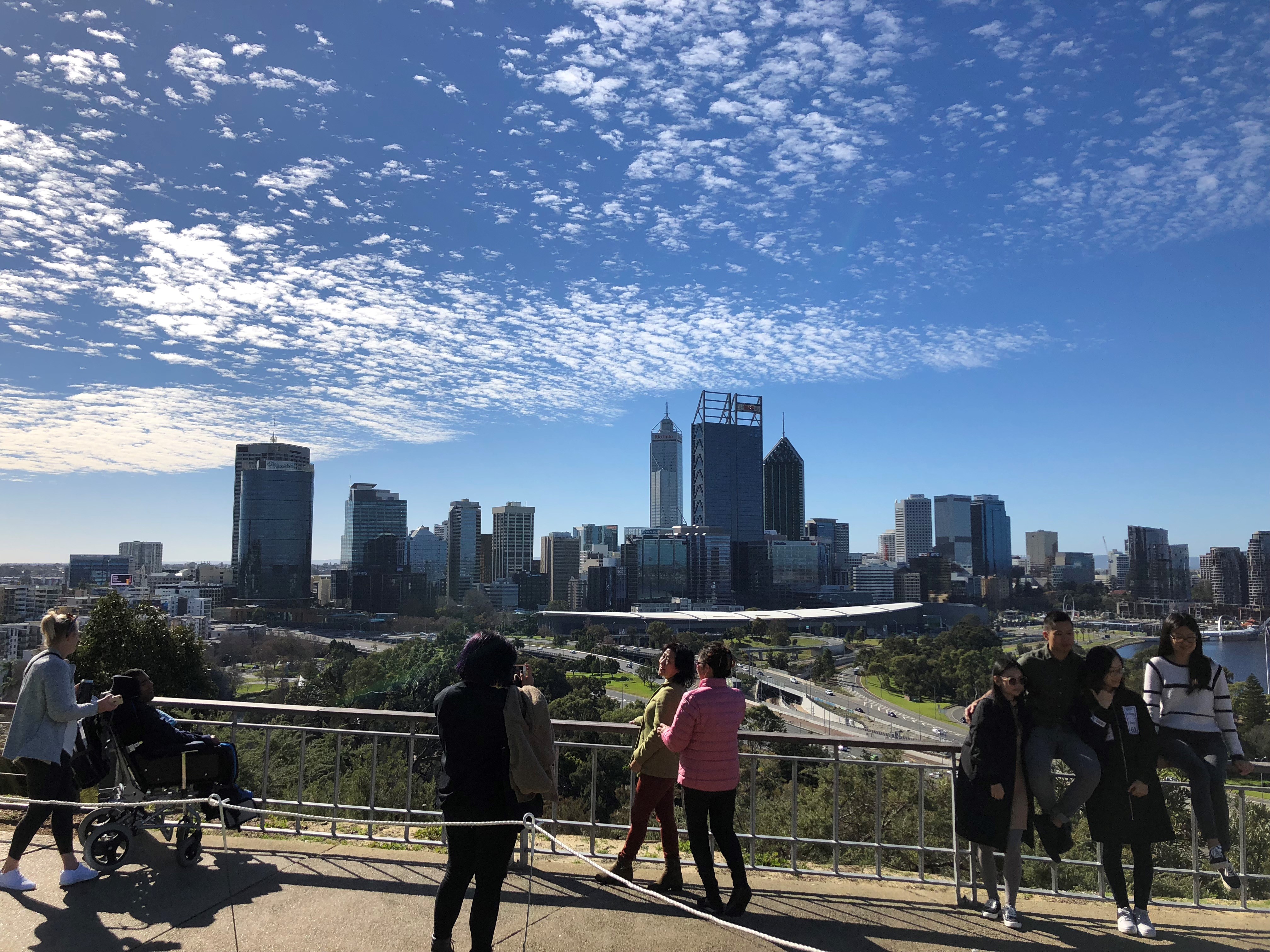
Since I arrived two weeks before my classes at Scotch College started, I was able to travel around Western Australia and witness some incredible scenery and attractions. One of the first places I visited was the beautiful Kings Park. Situated in the center of Perth, Kings Park is home to some of Western Australia’s most interesting native flora. It additionally boasts spectacular views of the Perth skyline..
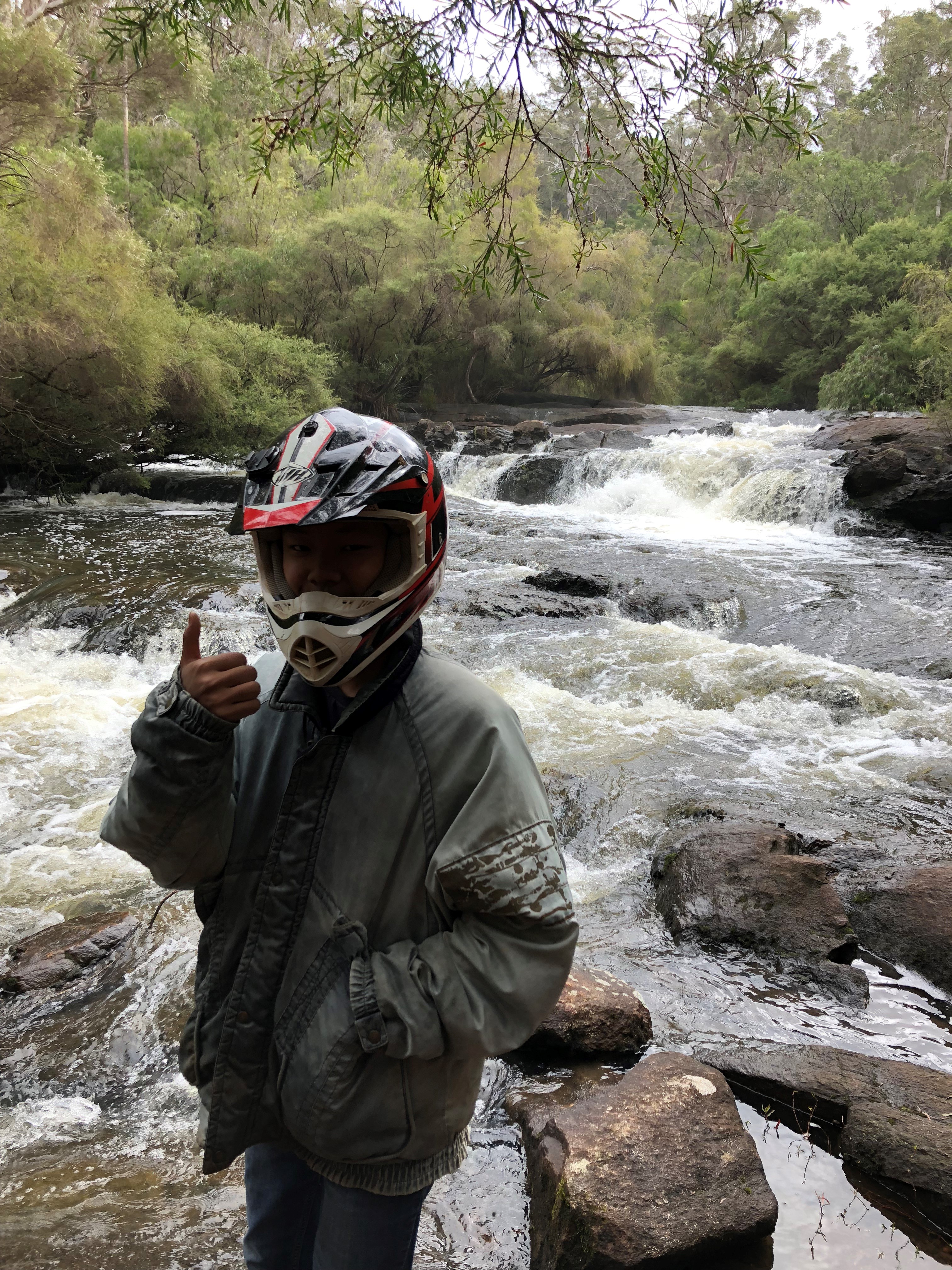
The following week, the Hewitts took me to visit their grandparents’ farm in Pemberton, approximately 240 miles away from their home in Fremantle. Stepping out of the car four hours later, I was blown away by the wide open spaces of the rural hillside. Although I was aware I would be staying in a farm, I was still surprised by the number of kangaroos and emus that were freely roaming around the nearby hills. Later that day, Mitch and his grandfather took me motorbiking for the first time around the tree-filled forests that surrounded their farmhouse. Despite being terrified for the first thirty minutes, I felt immensely relieved after I got the hang of driving the motorbike at high speeds (five miles an hour).
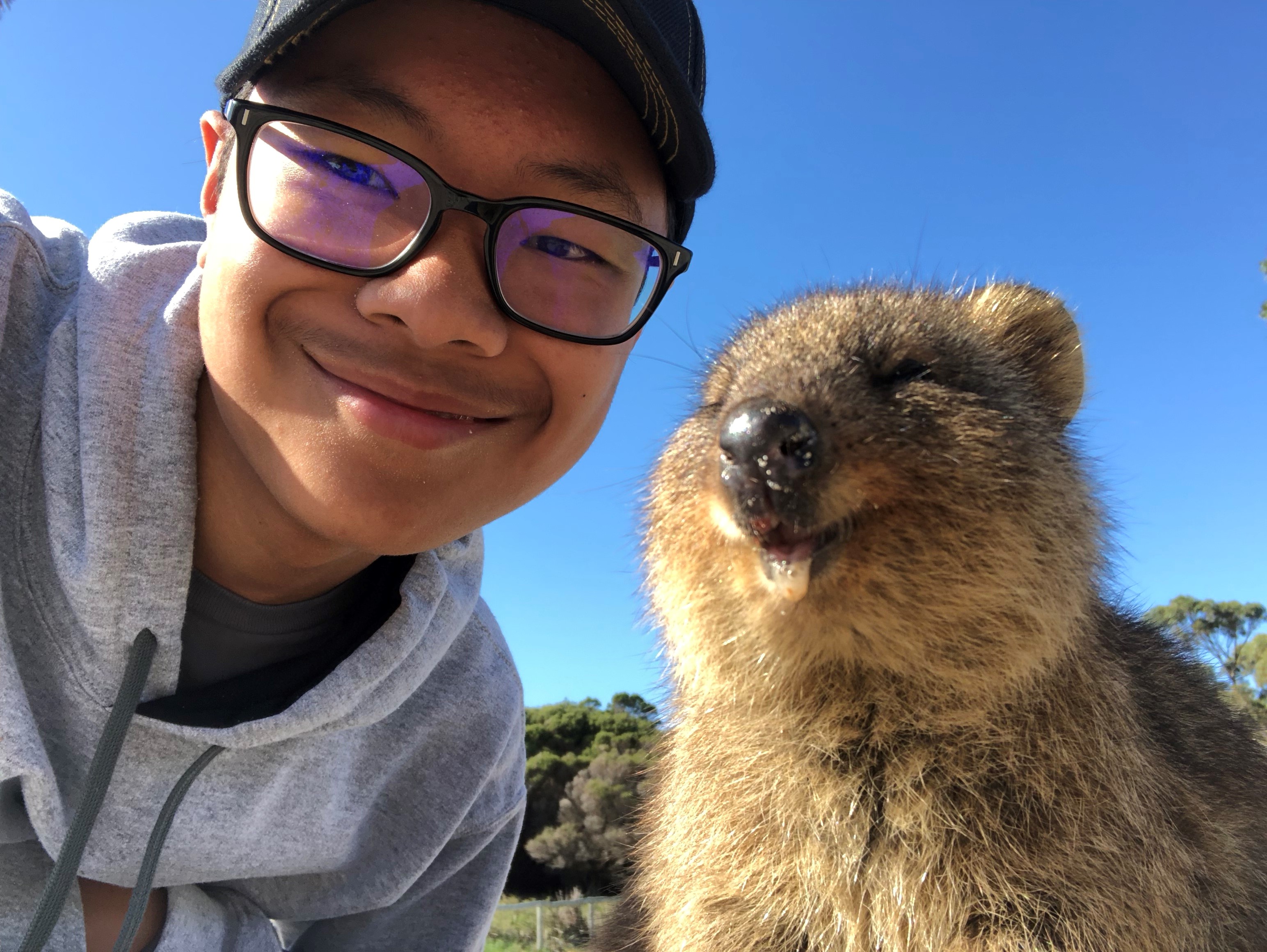
Two days before my classes at Scotch started, I visited the scenic Rottnest Island for an overnight trip. Although I was a bit apprehensive about starting school the day after a major trip, all of my concerns instantly disappeared when I took my first look at the beautiful island. The island was about ten times more breathtaking than I ever could have imagined. Waves of crystal clear water crashed on the sandy shoreline while the sun shone brightly over the expansive island. Additionally, Rottnest Island is the only place in the world inhabited by Quokkas: small koala-like rodents that tourists often take selfies with. A number of recreational activities such as surfing, fishing, kayaking, and souvenir shopping, are also enjoyed on the island.
My classes at Scotch College started the next day. Despite the fact that it took me a while to get back into the rhythm of school life, the transition itself wasn’t as bad as I predicted it would be. The hardest challenge was definitely trying to wake up at 6:00 AM after two months of sleeping in until 10:00 AM. After putting my school uniform on and eating a rushed breakfast, I boarded the 8:00 train to Swanbourne with Mitch. During the ten-minute train ride, I could feel my heart racing as my head slowly filled with intense apprehensive thoughts. “What if no one likes me? What will the classes be like? What will the teachers be like?”
As I walked off the crowded train and stepped into the Scotch campus for the first time, I was overwhelmed. I couldn’t believe that it was finally happening. Two class periods later, we took a 20-minute break. Oddly, I was mostly nervous about the break, since I knew I would meet all of Mitch’s friends in that time. To my immense relief, I got along really well with Mitch’s friends and we spent the entire break comparing our accents. Despite my general anxieties surrounding the first day of classes, I was surprised at how smoothly the whole process went.
For the
following week, I kept noticing aspects of the school which heavily
differentiate it from Athenian. Students don’t call teachers by their first
name, classes are significantly shorter, and the overall homework load
was a lot lighter than I was expecting (10-20 minutes a day). I highly advise
sophomore students that are going to Scotch in the summer to use the extra
downtime to hang out with classmates and learn more about the Australian
lifestyle. It’s also a good idea to do other enjoyable or productive activities
during your time away from home. For example, I found that I spent hours of my
downtime writing screenplays, photographing scenery, drawing, and preparing for
the SAT.
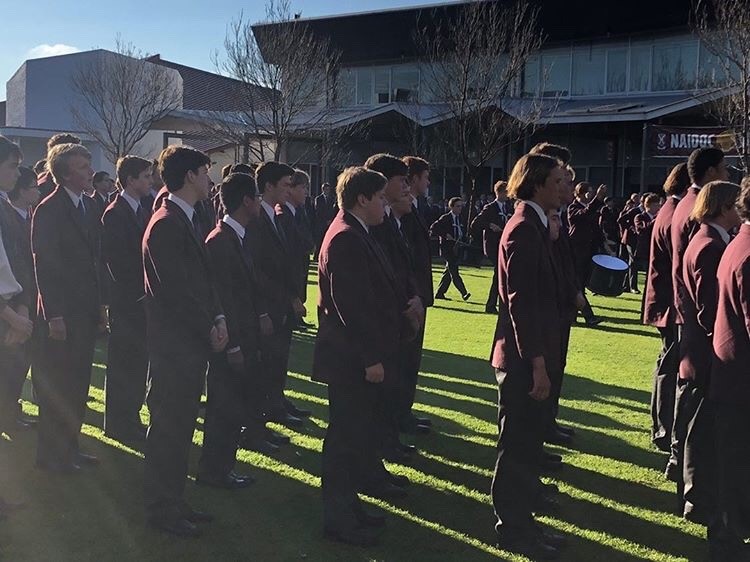
One of the most memorable experiences I had at Scotch College was my first marching day. The school has this tradition where all of the students march from the science block to the assembly hall every Friday. Although I was aware of this tradition before I arrived, I had no idea that the school actually makes it a competition between the various house groups. At Scotch, students are divided into 10 distinct house groups that compete throughout the year to win the house trophy. Since Mitch belongs to St. Andrew House, I was placed there at the start of the term. In the weekly marching competition, the winning house is determined by their ability to remain in complete synchronization. Since St. Andrew House is known for frequently winning the marching competition, I was nervous about messing it up for everyone. Although I was almost 100% sure I didn’t remain in synchronization, I was relieved when I found out that we won second place.
I’m approaching my final week here in Perth. Over the past six weeks, I have become attached to the beautiful city of Perth and the various traditions that Scotch College has to offer. Although I am sad to leave this wonderful place, I’m grateful that I had this opportunity to experience how people go about their daily life in Western Australia. I highly recommend taking the opportunity to go on exchange and making the most out of your experience there. Even though the seven-week experience might seem daunting at first glance, I truly believe that every student can find something to enjoy on this life-changing experience.
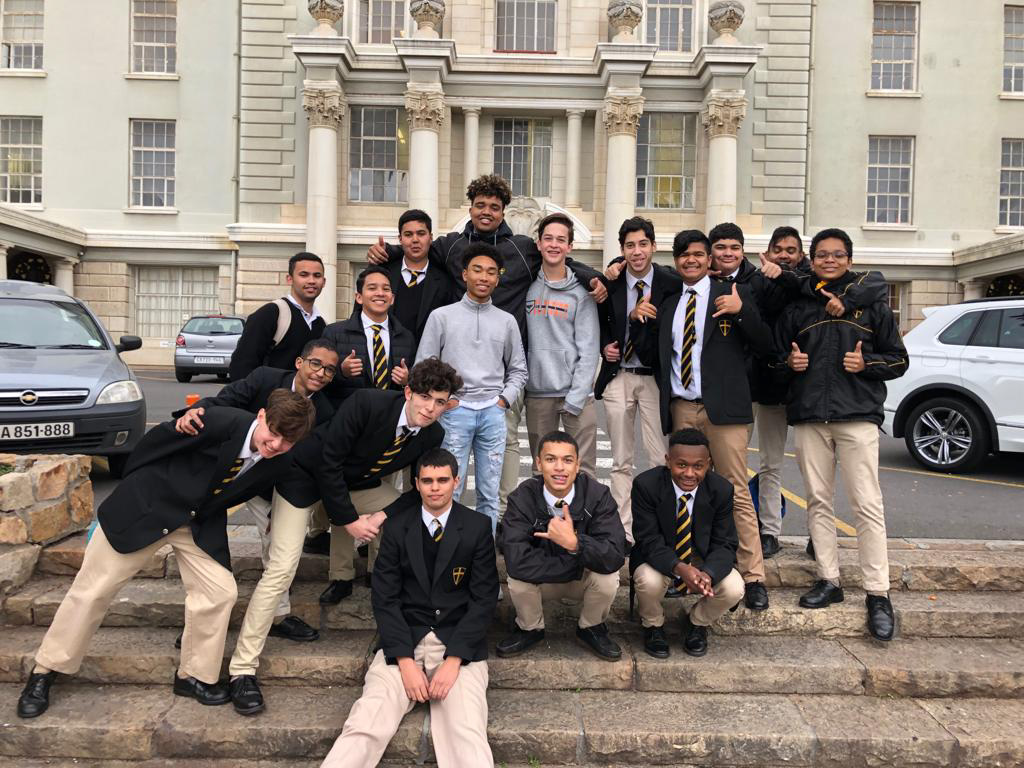
My friend Charlie and I came together on the flight to South Africa. When we left our families in San Francisco, I was frightened at the thought of living with another family for so long; however, I was excited because my exchange, Ethan, and I bonded very well when he came to live with me.
When we landed and went through customs, the immigration officers were very lenient with checking our information. Afterwards, Ethan and I caught up since we hadn’t seen each other in over a month. I immediately wanted to begin my introduction to Cape Town, so Charlie, his exchange partner, Ethan, and I went to the promenade to hang out and see the ocean. The next day, we visited a mall to get my clothes for school. I was surprised to see the precautions that stores must take to prevent thievery. For example, the stores all have detecting machines at the entrance and an employee that checks receipts.
The following day, I went to school and was introduced to Ethan’s friends and classmates. In class, the teachers are much less strict, have trouble commanding respect, and teach elementary material. The students are unfocused, talkative, and relatively unmotivated compared to the Bay Area schooling that I have experienced. The physical infrastructure of the school is outdated as the school is 150 years old. The social experience of school is similar to that in America. There are cliques, class hierarchy, etc. I have gotten along well with Ethan’s friends, but not so fluently with with the other students.
Thought I have resided in Cape Town for just two weeks, I have already seen multiple locations. I have been to the waterfront, paragliding, a helicopter ride, and Table Mountain. I have enjoyed my time and continue to be amazed at how kids from the opposite side of the world can be so similar and interact so eloquently.
As the time before
exchange decreased from months, to weeks, to days, and then hours, it slowly
set in that I would be leaving the U.S. for the first time. I had never been on
a plane for more than five hours and I had two long eleven and twelve hour
flights with an eight hour layover ahead of me. Surprisingly, I was more
terrified of the flights there than I was of actually living in a new country.
Leaving home was
extremely difficult. As I walked away from my parents and my brother, I instantly
began feeling the soon-to-be 10,226 mile distance between us. Luckily, my first
flight was on time without problems and I arrived in London with eight hours to
kill. After circling around my terminal for what felt the twentieth time, it
was time to board my next flight. I was able to somewhat sleep and read on the
second flight, but I was definitely ready to get off the plane.
As I finally gathered
my bags and sped through customs, I was greeted by my lovely sister (my host)
Lerato and her father Frans. Lerato had already stayed with me while she was on
exchange in the U.S. a few months before. We really connected while she was here,
so I felt very welcomed and relieved. I arrived at 10:00 am which meant I
needed to stay awake for the rest of the day so I would be able to go to school
the next day. I had the hardest time staying awake, but Lerato made it better
by staying by my side and not letting me sleep. We were able to just relax and
catch up, which was very comforting.
Even though I was half
asleep, I noticed major differences in my surroundings. One thing I already
knew was that they drive on the other side of the road. It feels really weird
to be driven around on the left. The roads also have lots of people in them as
well. There are not a lot of crosswalks or pedestrian crossings, so it’s common
to see people running through the street. Another difference is that every
house in the neighborhood where my host family lives has a big electric fence
surrounding each house. Every house has a gate that must open and there are
bars on every window. My first day was already off to a very different start.
I woke up the next
morning at 6:30 to go to school. My first day of school was actually pretty
amazing. Lerato’s friends were super excited to meet me and they greeted me
with lots of excitement. I also met up with Charlie and Hudson from Athenian.
They had arrived two days before me and I met their friends.
My first day of school
happened to be Mandela Day, which is an International Day of Celebration
honoring Nelson Mandela. The school had an assembly where groups of students
were given a colored dots and we needed to stay with those groups. There were
three different colors. Only one color could use the door closest to us, sit
down in chairs, have the teachers and faculty on their side, and have lots of
room to sit. I was one of the colors that had to stand in the middle with
limited space. There was a group behind me that comprised the majority of the
student body and had the least amount of room. The teacher began to ask very
simple questions that we all were able to answer like, “what is six times six?”
but only the students in the front of the room with all of the chairs were chosen
to answer. This group also received candy when they answered correctly. This
left the rest of the students feeling frustrated and confused. It was then
explained to us that this was meant to represent Apartheid in South Africa
before Nelson Mandela peacefully battled for its end.
After the assembly, we
moved into groups by grade, which are very small, and went to go give back to
our community. The grade 10s were instructed to go visit a day care center and
read to small children. The kids were so adorable and kind, which made it an
amazing way to start my exchange. It was truly an awesome experience. I am so
grateful for all that I learned and was able do with the school.
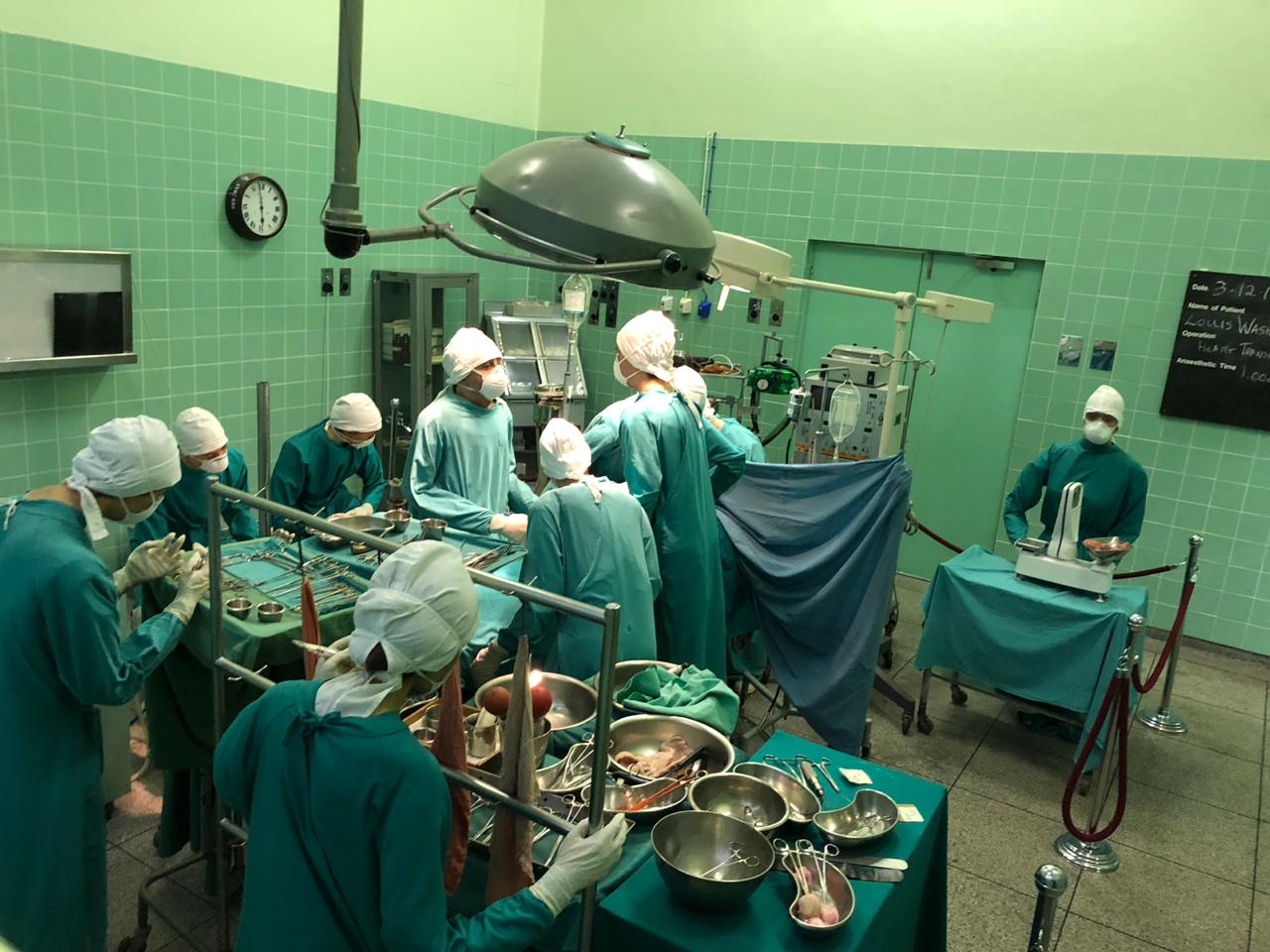
The following week was
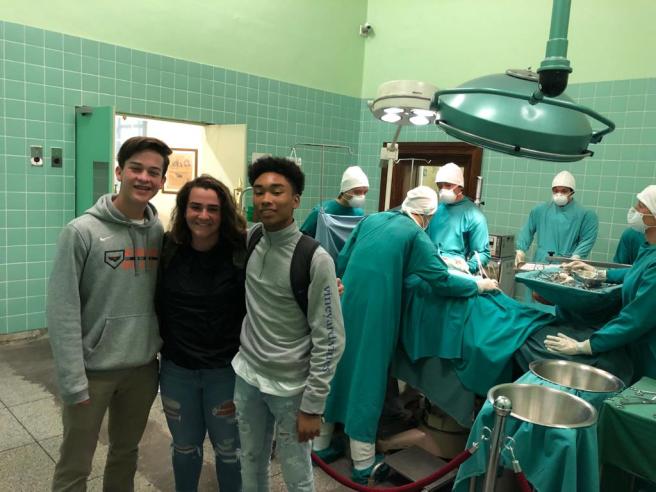
filled with outings and things to see. On Monday, the tenth-grade class attended
the Heart of Cape Town Museum, which is where the very first heart transplant
took place. It was amazing to see the real equipment they used and to follow
the story of the people involved.
On Wednesday, the
exchanges were invited to attend the visual art outing where we went visit an
art gallery in the beautiful town of Stellenbosch. We were then able to walk
around the town. We drove back to Cape Town and visited the South African National
Gallery. It was absolutely beautiful, and it was amazing to see the old
buildings and garden. After the art outing the exchanges were invited to serve
a meal to an impoverished settlement in an industrial area of Cape Town. St.
George’s has been serving this area for eight years along with other schools. We
served the meal out of a small van and the families living in the settlement
instantly came running out. There were elderly people, infants, and just about
every age in between and everyone seemed to know the St. George’s kids already.
It was amazing to see them interact in such a close way, but it was also
extremely heartbreaking to see how these people are forced to live. We will now
go on this service trip every Wednesday until we leave. The amount that St.
George’s gives back to their community is truly incredible.
Overall, I have had an
amazing time in Cape Town so far. My host family is amazing, the other students
at the school are so welcoming, the school includes me in everything, and I
think I have adapted very well. I am surrounded by beautiful old buildings and a
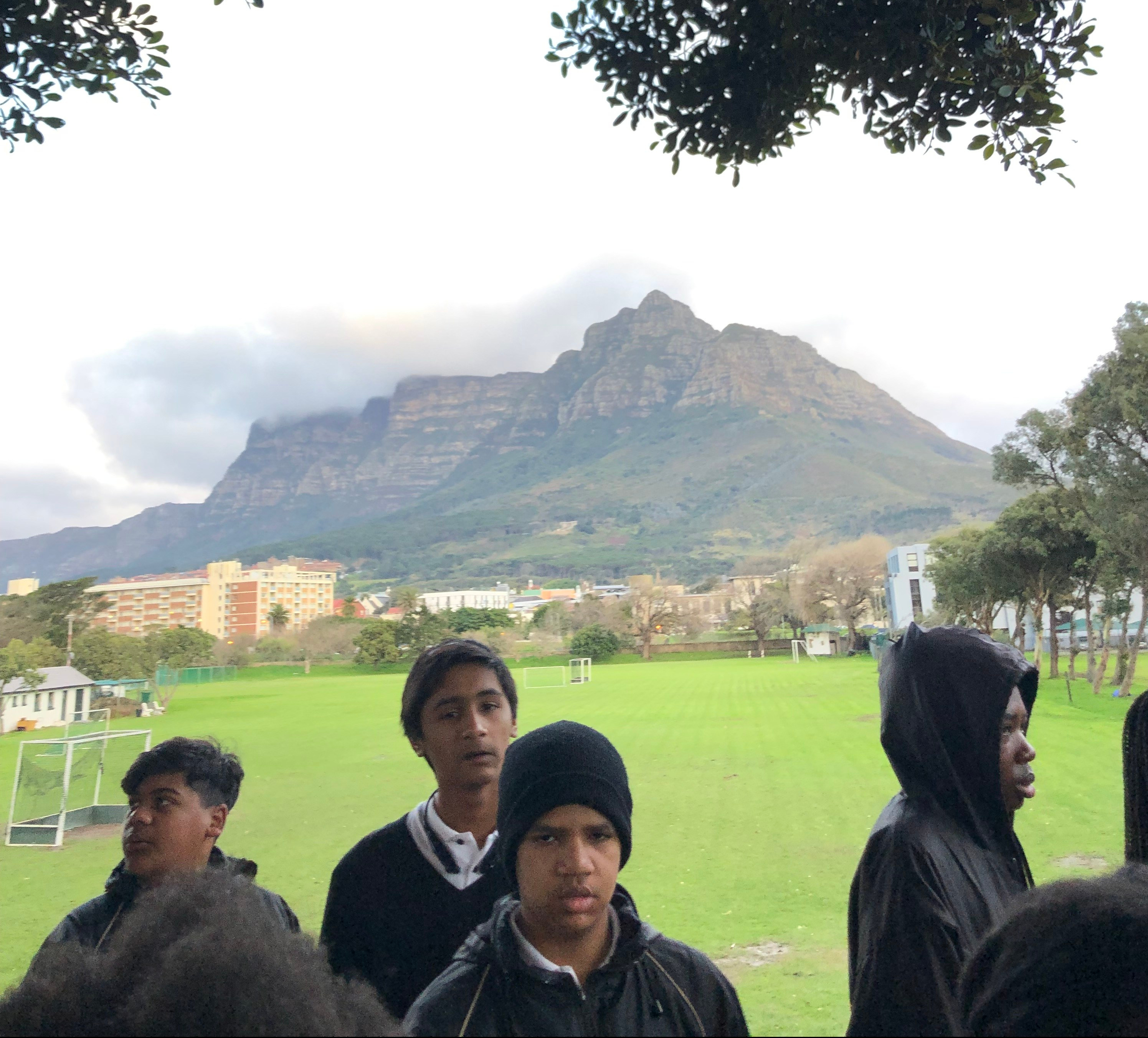
gorgeous waterfront, and I am right at the base of Table Mountain. The view
sort of reminds me of home since Athenian is at the base of Mount Diablo. I miss
my friends and family so much, but I cannot wait to see what else exchange has
in store for me!
My exchange experience has been very unique and it has only just
begun. I had already hosted Gia, my exchange, so I knew what to expect. I knew
that we did not connect very well and did not have much in common. I was closer
to Ethan, another student from St. George’s who was Hudson’s exchange so my
relationship with my host had the potential to be awkward. Hudson and I flew
together to South Africa and 33 long hours later we arrived. At the arrivals
gate in Cape Town, I immediately recognized a familiar face, but it
was not my exchange, it was Hudson’s. I frantically looked around for Gia, but
with no luck, I went to greet Ethan and his family. After 30 panicked minutes
later, thinking the worst about what happened to them, they arrived. Not the
perfect start to my exchange that I imagined, but I was thankful to be there.
Driving to their house we passed one of the biggest townships in
Cape Town. It is impossible to describe the feeling that I got when I saw it
for the first time. I had seen videos before but nothing can prepare you for
seeing them in person. As we arrived in Gia’s neighborhood, I suddenly noticed
something different. Every house had a huge fence with either barbed wire or a
small electrical fence on top. A huge change, unlike anything I had seen
before. At his house, I was delighted to see that I had my own room and
bathroom, which is an upgrade from my house. The only problem was that my room
was on the other side of the house from where they spent most of their time,
which led to me feeling somewhat isolated. The good news is that Gia’s sisters
and mom are outgoing and very friendly and often invite me to spent time with
them.
In the first few days, it became very clear that my family was
special. They were immigrants from Italy and were very aware that they were
treated differently because of that. It was obvious when we went out in public
to restaurants or stores. Yet at school, the kids did not seem to care about
any of that. They were fascinated with the American lifestyle. The first few
days Hudson and I were like zoo animals, standing in the middle of a circle of
twenty kids firing questions at us. It was exhausting meeting so many new
people and the first few days flew by.
About a week later it was Mandela Day, which was something that I
was unaware of. It is on his birthday and people are supposed to do 67 minutes
making the world a better place, having each minute represent one year that
Mandela did. For our grade that meant going to daycare and watching kids for a
while. It was super impactful for me to watch after these kids in this building
in a crazy neighborhood. Many of them didn’t talk and were very shy because of
their situations at home, but when they opened up they were very fun. The 67
minutes flew by and all of the teachers were thankful for their break. The next
day we went on yet another outing. It was easy for them because their class is
so small and because of this, they are very close.
School has been very easy because I knew some students there
before I arrived, but home has been more difficult. When we get home Gia and
his sisters have homework and his Mom has work, so I often find myself alone in
a seemingly empty house. Because of this, I have spent most of my time in my
room. I have made an effort to go as many places as possible, be it dropping
his sister at dance or running errands to the store.
English is not my host family’s first language, and they wouldn’t
be speaking it if I was not staying in their house. They have made an effort to
speak English but this has led to some strange situations because if they switch
to Italian and I have no idea what they’re talking about. It can be frustrating
not being able to understand what is happening. I hope as these weeks continue
our communication gets better.
My exchange so far has not been perfect, but I have learned so much from it. The resourcefulness that they have here is something that I think we could learn from. To them nothing is broken and useless, it just needs to be fixed. My family doesn’t have a barbecue, but that’s fine; they just make a fire out of sticks from their tree and use the coals to cook their food. It has allowed me to realize how easy we have it in America.
In these next few weeks, I hope that I continue to have a good
time, see more of the city, and strengthen my relationship with my host family.
I have loved all of the time that I have spent here. Although it has not been
perfect, I have made it the best I can.
My
experience at St. Constantine’s has been one that I will remember for the rest
of my life. The numerous friends that I made combined with experiencing a
different culture/country make this trip the most memorable. To start off,
Athenian, the school that I go to in California, is different from SCIS. We do
not have any uniforms at my school and we call the teachers by their first
name, but there are also similarities. SCIS has a similar approach to the school’s
environmental footprint and the community is very tightly knit just like at
Athenian. The students across many grades interact with each other and
everybody knows everyone else. The teachers also have a friendly relationship
with the students, just like at Athenian.
Furthermore,
from this exchange in Tanzania, I have learned so much about the culture, the
way people live, and daily life. From social classes to climate change, my
general knowledge has grown as I have learned about the way people view and
approach many of these issues. The different perspectives on many areas has
been eye-opening. The multitude of changes from the US, which I previously
thought would be difficult, was actually nice to experience because I got to
see how people in such a different country live.
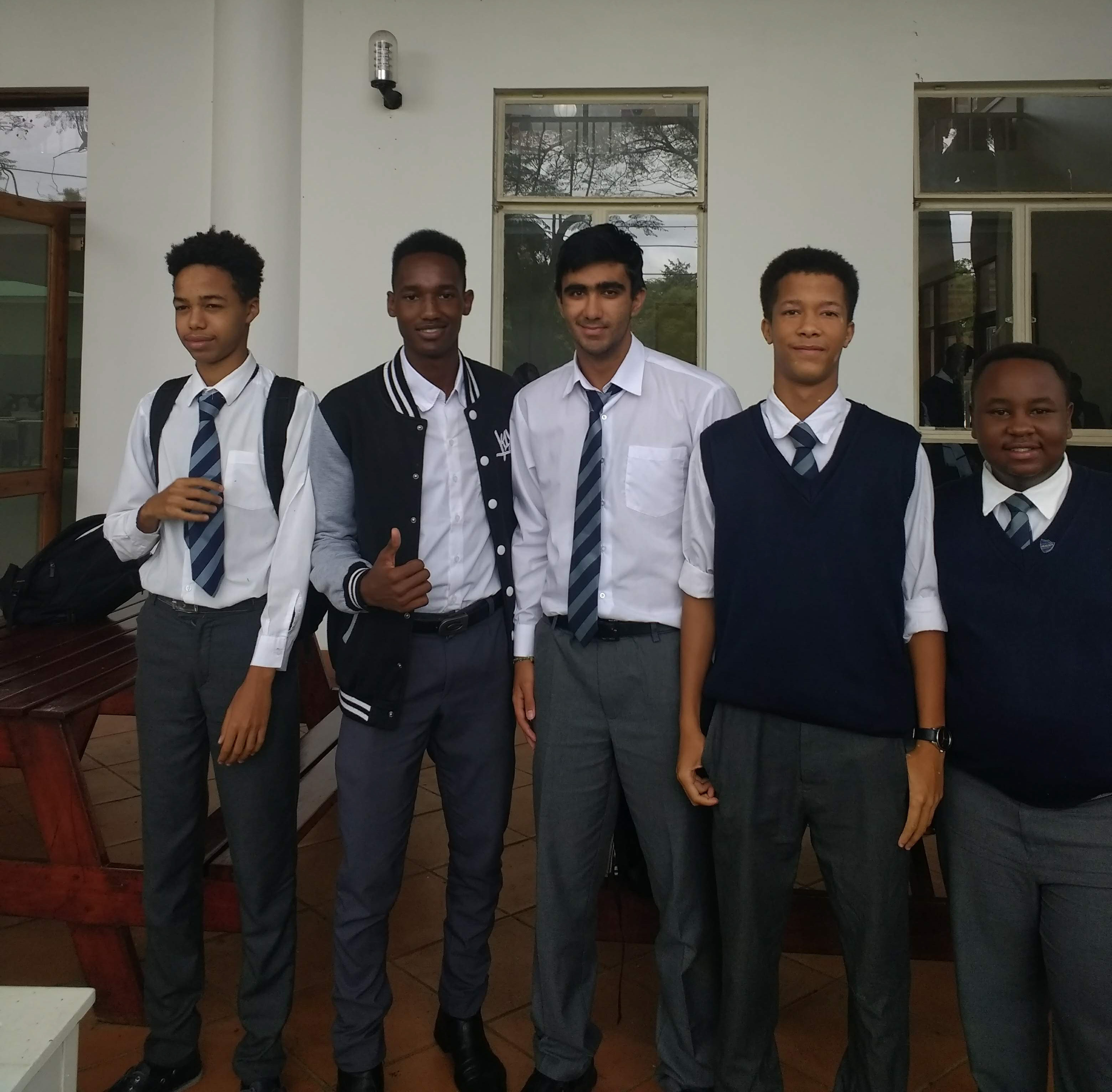
Coming
to SCIS, I was terrified of not knowing anybody. I was frightened that students
here may not like me, or that they already have their pre-existing groups and
would not interested in one random person from the US. I have never been more
wrong in my life. Everyone was really interested in the fact that there was a
new person on campus, a different person. The things that I initially thought
would not make people like me actually made them want to talk to me. I could
not have asked for a more welcoming and friendly community to be a part of. The
friends that I have made on exchange will be my friends for life.
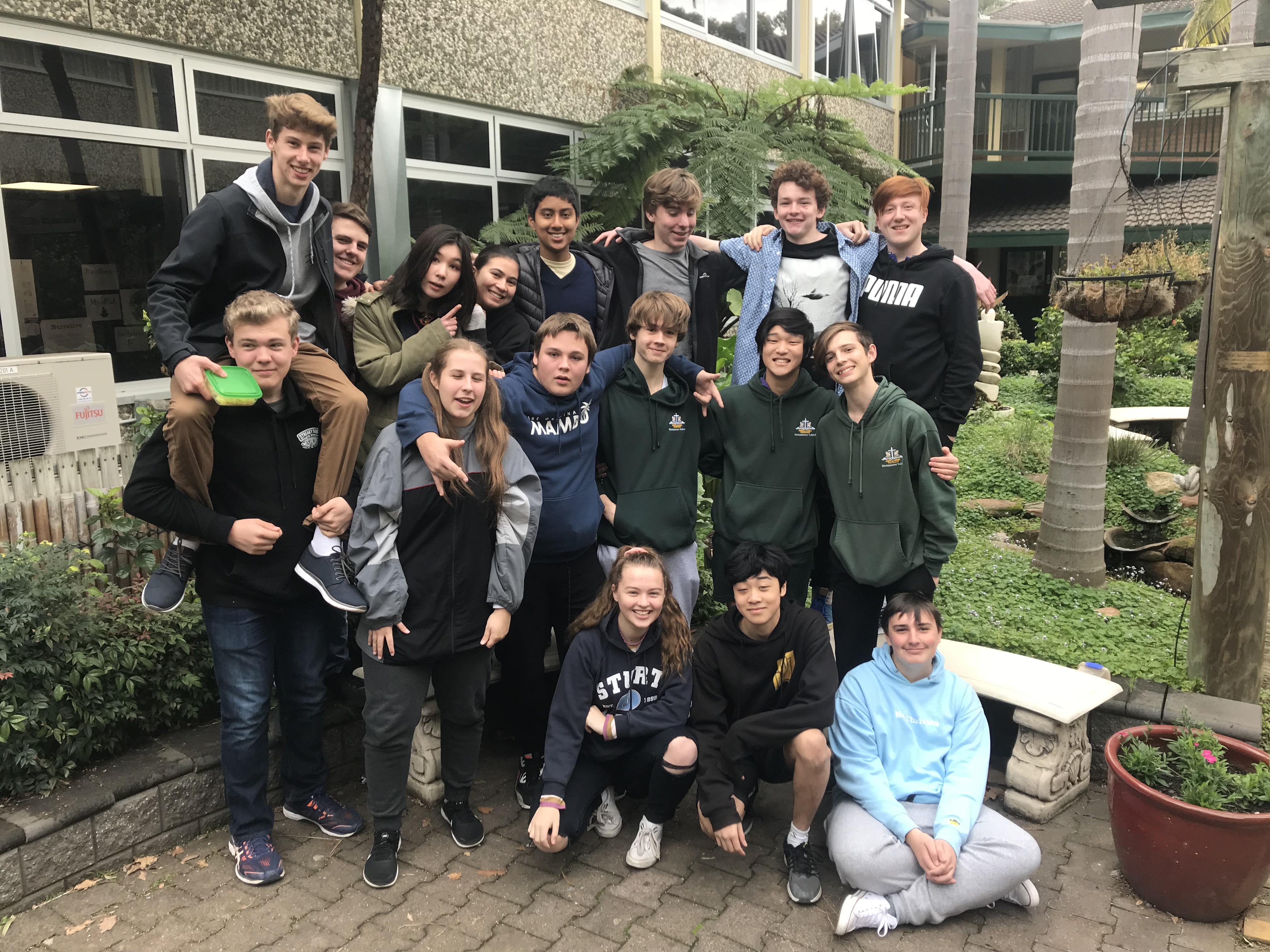
I just arrived in Adelaide on Sunday,
and it’s felt like a whole new world. Right out of the airport gate, I was
surprised to discover Angela (Patrick’s mom) and Julia Chukwani (Westminster’s exchange
coordinator) waiting for me. They didn’t have to wait outside the security area
because in Australia anyone can come straight up to the gate! When I left the
airport, I made my next blunder—trying to get into the front right seat of the
car, until I realized there was a steering wheel in front of me. Then, of
course, there was the adjustment period for driving on the left side of the road.
Although this was not my first time in a country that drives on the left, (e.g.
England, India), it was still something I was not readily used to.
I also needed to acclimate myself to the
sudden change in season. Instead of the sun setting at almost 9 pm, it set at
just after 5. The weather was cold and rainy, which is very different from the
burning Australia I had imagined. It was nice to be away from the burning
California sun—or, even worse, their own summer weather, which apparently goes
up to 110˚ (or 45˚ C, another of the units which I was not used to).
The next day was Monday, my first day at school.
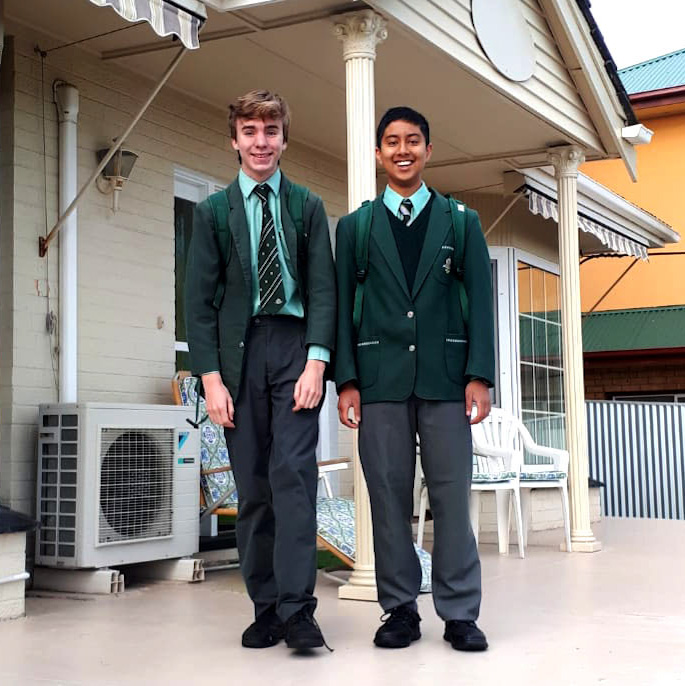
After experiencing Athenian’s non-existent dress code for two years, I found
the school’s formal uniform very strange (and uncomfortable). I had to wear a dress
shirt, sweater, blazer, and a tie! (I didn’t know how to tie a tie, but I do
now!) We had to spend the entire day in dress shoes, which were not the most
comfortable.
The first students I met from Westminster were
on the train to school. Learning names was harder because everyone was in the
exact same clothes. Moreover, I met everyone at the same time in a large crowd.
There are still a large portion of which I have not learned yet.
I will be the only exchange student at
Westminster throughout my stay, which is quite different from the experiences
of the exchanges at Athenian, who usually bond quite closely together. In a way,
this is good. Rather than staying in the bubble of other exchanges, I am forced
to go out and completely immerse myself in the Australian culture.
The number of American stereotypes I heard when
meeting students was mind blowing. The first thing that everyone would ask me
after Patrick introduced me as “his American”—often before my name–was
whether I owned a gun or liked Donald Trump. They were very disappointed to
discover that I did neither of those things. Their image of America resembled the
Deep South, and not California, though someone did think that Detroit was in
the South.
Fascinatingly, they were more
well-versed in American politics than their own. They were aware of the Mueller
report and Russia investigation, but couldn’t name their own prime minister who
had been elected in a surprise victory not five days before. Additionally, they
had never heard of the little piece of history I knew about Australia: The Emu
War (a military extermination operation they lost to the emus in 1932).
The amount of slang was very disorienting. It
seems as though Australians are so lazy that they shorten every word to its
first syllable and add “o” or “ie” to the end. Here’s a
little Australian slang dictionary: Servo: Gas
Station Arvo: Afternoon S’Arvo: This
afternoon Barbie: Barbecue Choccy
Milk: Chocolate milk Bottle-o: Liquor store Macca’s: McDonald’s (This is the official name now!) Thongs: Flip-flops
Part 2 – Ending
I have less than a week left in Australia, and it has been a blast! Because I have been taking year 10 classes but Patrick is in year 11, I have made friends with both grades. Overall, everyone has been really friendly. I have enjoyed talking to friends about all of the differences between Australian and American slang, culture, and politics. Through these conversations, I have also continued to notice a number of differences between here and America.
The Australians’ treatment of Aboriginals is very different from how we treat the Native Americans. Last week, we had an assembly at school for Reconciliation Week, which is an annual week dedicated to recognizing the wrongs that the Europeans committed when violently colonizing Australia, and reconciling with them. There were three Aboriginal visitors from the local tribe at the assembly, who began it with a traditional “smoke ceremony.” This involves burning native plants to ward off bad spirits. Then, we listened to a few students give speeches about their experiences with their own Aboriginal heritage. The Aboriginal guests also spoke about their experiences and shared facts about the achievement gap between Aboriginals and non-Aboriginals. Lastly, an Aboriginal musician performed music. Even outside of the assembly, I could tell that Australians are a lot more conscious of the Aboriginals than we are about Native Americans. For instance, every place where there is an Australian flag, there is an Aboriginal flag. It is a constant reminder of their original history in this country. In contrast, in the US, we rarely discuss Native Americans, even in an age when racism is a central political topic.
I have been pleasantly surprised by the public transport system (when it works, that is). Even though locals seem to be constantly complaining about it, the ability to get pretty much anywhere without a car amazes me. Patrick’s house is a one-minute walk from the train station, which means we can get to school or the city effortlessly. Even at places where the train doesn’t go, such as Glenelg Beach, we were able to take a tram or bus there. While it is convenient when it does work, twice in the last three weeks we have had an issue where the train either didn’t arrive at all (it broke down two stops before and blocked the tracks) or just didn’t stop at our station!
In terms of academics, Westminster seems much more relaxed – apparently, “unis” (universities) here don’t see students’ grades except in their senior year. There is barely any homework each night (30 mins to 1 hour). In terms of rules and discipline, however, the school is much more rigid. If teachers see a phone, even at a lunch or break time, they will immediately confiscate it for the rest of the day. The uniform rules are also very strict. You can get in trouble for not wearing the top button of your shirt! However, the school is a lot less religious than I expected, given that it is a Christian school. Most students don’t know which denomination the school is a part of, which is the Uniting Church (an Australian union between a few churches). The only sign of it being a Christian school at all is the 20-minute chapel service on Friday mornings.
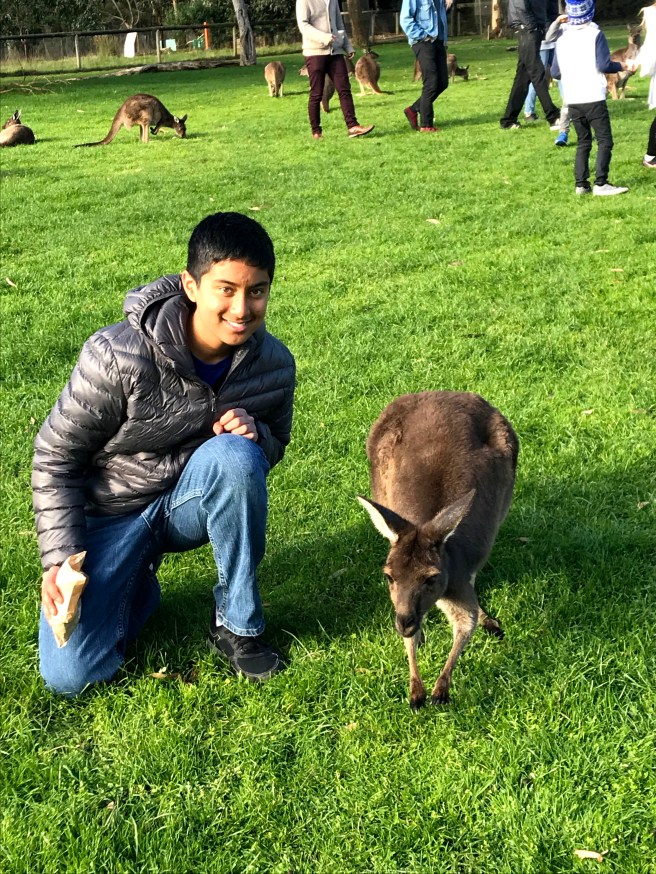
About two weeks into my stay, we visited Cleland Wildlife Park. We were given a bag of food to feed the animals. The kangaroos and wallabies were very friendly. The more I fed them, the more they wanted. I was even able to pet them! We were also able to pet a koala. We also saw emus and dingoes.
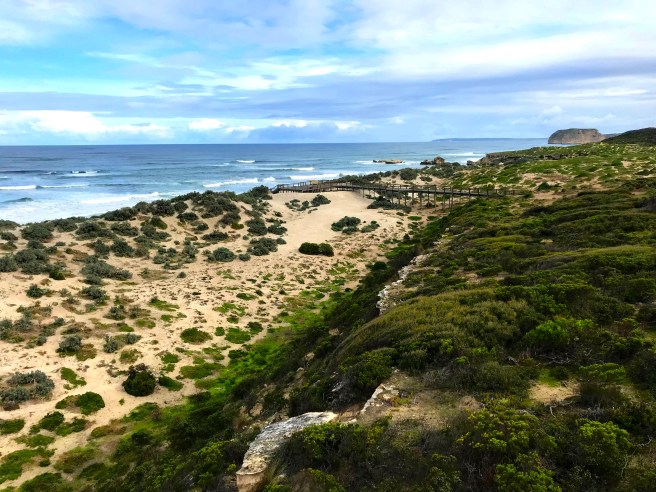
Just last weekend, we visited Kangaroo Island, which is probably the most popular tourist destination in the sparsely developed South Australia. To get there, we drove an hour, and then took a one-hour ferry. We stayed in the former home of an early European settler who had lived on Kangaroo Island for 71 years!
We had stayed in Penneshaw, which is on the east end of the island, however, all of the main sights were about a two-hour drive across the island, so we did that on our only full day, Saturday. During the drive to the other side, we saw a number of animals; however, most of them were kangaroos that had sadly become roadkill.
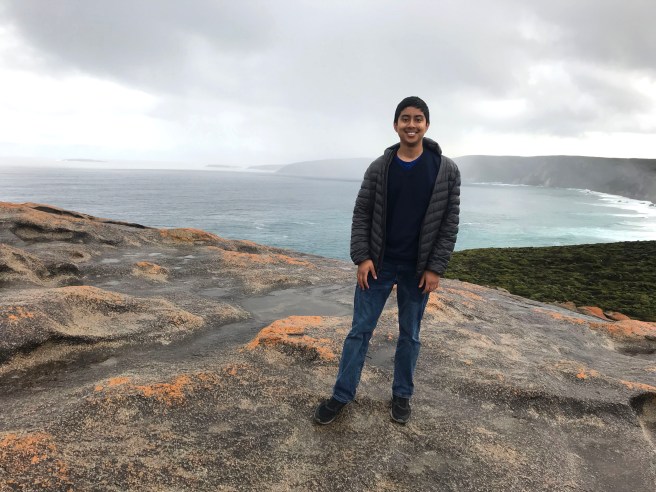
The first place we visited was called Seal Bay, but we only saw about five sea-lions because it is winter. We then visited Admirals Arch, where we saw “heaps” of seals (as an Australian would say). There were a number of rocky areas where the seals were relaxing. The last place we visited on this side of the island was “remarkable rocks.” This was a set of amazing rock formations very close together, that were in the middle of an otherwise remarkably green area by the ocean. We even spotted a wild kangaroo while walking in the parking lot! That evening, we decided to go back to civilization and visited the only real town on the island, where we ate at an Australian pub. It was a real Aussie experience, as I had never been anywhere like it. It was a cross between a typical diner and a bar with live music.
The next day, we decided to visit a town called Victor Harbor, which is back on the mainland. I learned that this is the most popular destination for an Aussie high school tradition known as “schoolies,” where the seniors have a week-long holiday right after their last final exams to party (The drinking age in Australia is 18.) The town itself was a cute oceanside retreat that seemed fairly empty–the population triples in summer because many people have vacation homes there. We walked a short bridge to “Granite Island,” and from the top of the island we were able to see far along the coast. Although we didn’t stay there overnight, if we had we may have been able to see penguins. (Australia has them too).
I have had a great time in Australia, and I am sad to be leaving so soon! I was very nervous at first, but the experience has definitely exceeded all of my expectations. I am hoping to come back with my family at some point and visit Patrick, his mom, and all of my friends at Westminster.
For me, exchange was an interesting experience. The best parts of the experience were the language immersion and how far I was from my comfort zone. Although I am only a French II student, I still managed to participate in discussions and was able to connect with many people. It was also helpful to be forced to be more confident than I am at home. I realized that if I wanted to have a good experience and connect with people, I needed to be outgoing and confident.
The most challenging parts of exchange were dealing
with things that made me uncomfortable and keeping up with the conversation. A
lot of times during my exchange, I found myself in situations in which I had to
be more outgoing than I usually am, where I had to push myself to be more
confident. I know that if I had been my same shy self, then I would not have
had such an amazing experience. Also, because of the language barrier, I had
trouble understanding what people were talking about, so I had to constantly
pay attention to what people were saying. To my surprise, the people at Le
Salesien did not engage with me that often, such as asking me questions about
myself and my country, so I had to contribute to the conversation in different
ways. Despite this, I became friends with my host’s group of close friends.
I found that it was very difficult for a
student exchange to make friends outside of their host’s friend group at Le
Salesien because I did not have my own schedule, but luckily the friends I made
were very kind and welcoming.
I found that Canada is very similar to America.
I did not learn that much about the world as a whole as I have on other travel
experiences, but I learned a lot about myself through this experience. I
learned that I still operate well outside of my comfort zone and, even if I am
a bit shy, I jump right into making meaningful connections with others. After
this experience, I have been much more confident in myself and my actions.
I definitely would recommend going on exchange
to others. Even though my experience was not as exciting as others who go to
more exotic places, I still believe that no matter where you go, you will
always learn something about yourself and you will leave as a different person.
I arrived
in Hamburg on a Sunday afternoon. I’d been awake and hadn’t eaten for over 24
hours, and my grip on reality was fading. That afternoon my exchange, Isi,
showed me around her lovely neighborhood and we took a walk on the river’s edge.
I felt incredibly laid back and wondered if most of my exchange would be this
relaxed.
We drove
to Louisenlund later that day. Just seeing the school made all those nervous
feelings I’d been trying to suppress come right back up. Looking around and
hearing people rapidly speaking a language I didn’t understand was overwhelming.
Just being in a different country with only one person I knew was overwhelming,
which is what brings me to mention an effective piece of advice I was given
before leaving: take a shower the night you get to your exchange school/house.
It gives you time to yourself to reflect on the beginning of your exchange, and
it feels good to be clean after a long plane ride.
The first
school day was a bit hectic for me, but I expected that. I’m not in the same
program as my exchange, as her classes are in German, so she brought me to a
group of girls who are in the IB [International Baccalaurate] program like me. They
were incredibly kind and inclusive, and one of them skipped their German class
to give me a tour of the school. The rest of the day I was tossed around like a
ball to multiple people who showed me different things and took me different
places. It was intense, but I was glad my first day had gone how it did.
The time
my exchange was scheduled for was a bit weird, as school is only going on for
three out of the six weeks I’m there and exams are happening while I’m in
school. Most of the days I’m told by other students that I shouldn’t waste my
time by showing up to class, as it’s just a study period. This was a bit
disappointing at first, as not having class left me with more free time than I
know what to do with, but I’ve found that there is always something to do if
you go looking for it. At one point, there were five other exchanges at Lund
with me. They came from Australia, New Zealand, India, Canada, and Colombia.
All of them are in the IB program as well, so we’ve all had a lot of free time.
As a group, we’ve gone to Lübeck, Flensburg, and Kiel to sightsee and explore
for a day.
The second
week I was at Louisenlund, we had a long weekend that started on Thursday. Isi’s
family took me to Berlin to sightsee and I got to know her family better. Her
parents and older sister both speak English very well and her younger brother
is learning it incredibly fast. They’re super generous and kind. I feel really
lucky to have them as my host family.
So far, my
exchange has proved to be nothing like I expected, but I’m really glad I’m in
Germany having this experience.
Streams of yellow light escape through stiff curtains as the sun rises over the leaf-littered rugby field outside the window, covered in frost for a few minutes before melting away. Uniform shoes clap against the pavement as students hurriedly rush to select the largest piece of cake at morning tea before getting back in line for seconds. Melted cheese and crumbs from lunchtime toasties litter the dining hall tables before being wiped away at the ringing of the bell. Wiping suffocating dust off riding pants after a quick ride and grooming the horses before hurrying to dinner at dusk. A mix of rap and early 2000s pop music vibrate off the shower walls, still humid with remnants of steam from the few warm showers earlier in the night. Silence in a boarding house of girls eagerly anticipating bed checks before running down the dark hallways into rooms to play cards late at night.
I’m approaching
my final days here at New England Girls School (NEGS) in New South Wales,
Australia. Most people think Australia is either just another version of
America or a barren desert crawling with tarantulas, crocodiles and kangaroos. Based
on my experience here, neither of these impressions are true–although I did
see a moth larger than my hand. Since it’s winter here in the southern
hemisphere, it snowed a little on my birthday in June!
As an
Athenian day student, I adjusted to the many changes that come with boarding at
an Australian Christian girl’s school. I wear a uniform every day covering my
entire body with the exception of my face and hands. I go to chapel every
Thursday and attend marching practice a couple times a week. While these were
all very strange changes for me, I was able to quickly accept them as part of
life here at NEGS. The most difficult changes to adjust to were the numerous,
and sometimes unnecessary, rules. You can only have your phone before dinner
and after prep. Hair must be worn up with a ribbon at all times outside the
boarding house. Younger grades must yield to upperclassmen when entering and
exiting buildings. Backpacks aren’t allowed in the classrooms. Living at NEGS
has definitely helped me appreciate the freedom and trust given to students at
Athenian.
While the
strict structure at NEGS is sometimes challenging, I’ve been provided with so
many incredible opportunities and experiences that I wouldn’t have had anywhere
else. Less than 24 hours in and I was already on an excursion to a farm with my
buddy’s agriculture class. I learned about biodiversity and biosecurity, how to
determine soil fertility, and the process of running a farm and raising cattle.
Agriculture and farming play a significant part in the lives of many girls and
their families at NEGS. About half of my class, only 40 girls total, grew up on
a farm or riding horses. Many of these girls have a horse in the school’s
stables; they play polocrosse or do equestrian after school and compete almost
every weekend.
One of my
favorite parts about going to school at NEGS is taking courses that Athenian
doesn’t offer and learning new things without the pressure of grades. I’ve been
able to take culinary classes and learn about design and fashion in my textiles
class. My favorite academic classes are Geography and Science. We’re currently learning
about global wellbeing, evolution and natural selection. Evolution is an
especially interesting topic here because it sparks heated debate in our
Christian Studies class. Attending Christian Studies and chapel has allowed me
to better understand the concept of religion, and routines like saying grace
before every meal have helped me appreciate a different lifestyle embraced here
at NEGS.
The
Australian lifestyle and the lifestyle at NEGS are very different than what I’m
accustomed to at home. It is strange calling teachers by their last names and
addressing them as Ma’am and Sir. While this is a sign of respect to teachers
and administrators, I found that most students didn’t respect them at all.
During my first lesson I was appalled by how many girls interrupted the teacher
with disrespectful comments or bad attitudes masked as questions. When I
expressed my shock to my buddy, she laughed and flippantly said that it isn’t
even bad here compared to most Australian schools. I also noticed a different
attitude towards LQBTQ+ people and issues. Hearing some of my friends use ‘queer’
as an insult or listening to them gossip about a trans student was an eye-opening
experience for me. While I was prepared to possibly encounter this on exchange,
I was surprised by racism towards the other exchange students. Australian girls
would try to scare the Japanese exchange students and dehumanize the Indian
exchange students by only referring to them as the Indians, even in their
presence. This really upset me and I talked to my classmates about this
behavior. While it was uncomfortable, I know it was the right thing to do and
hopefully made a difference. I’m so thankful that I live in an accepting place
like the Bay Area and am a part of a community like Athenian that supports all individuals
and respects their identities.
Throughout
the months leading up to exchange, I was becoming increasingly anxious about my
time here. I was worried that I wouldn’t understand the classes, that the girls
wouldn’t want to be friends with me, or that I wouldn’t like the food. But
since arriving here, aside from a little homesickness, I’ve enjoyed myself
immensely. Exchange has allowed me to step out of my comfort zone and submerge
myself in a foreign environment that has challenged me and helped me grow as a
person. I’ve made so many amazing friends, tried new foods and activities, and
experienced my home country in ways unique to me. I’m beyond thankful for this
opportunity. I appreciate the things I’ve learned here and the memories I’ll
never forget.












 The Athenian School Exchange Blog